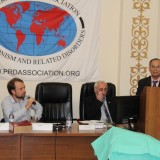
Roundtable Discussion: «Drug Provision in Primary Healthcare and Inpatient Care in the Republic of Kazakhstan»
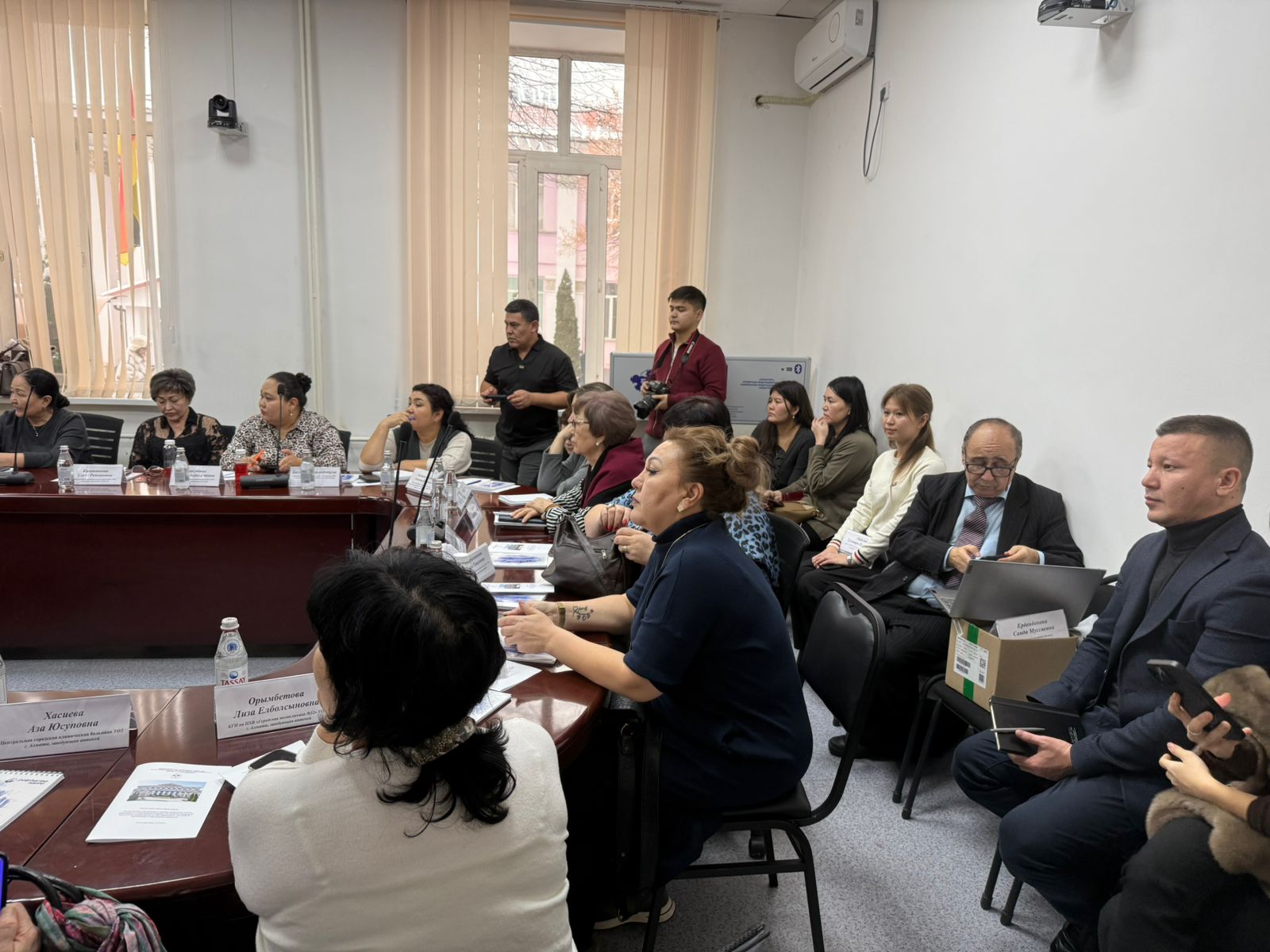
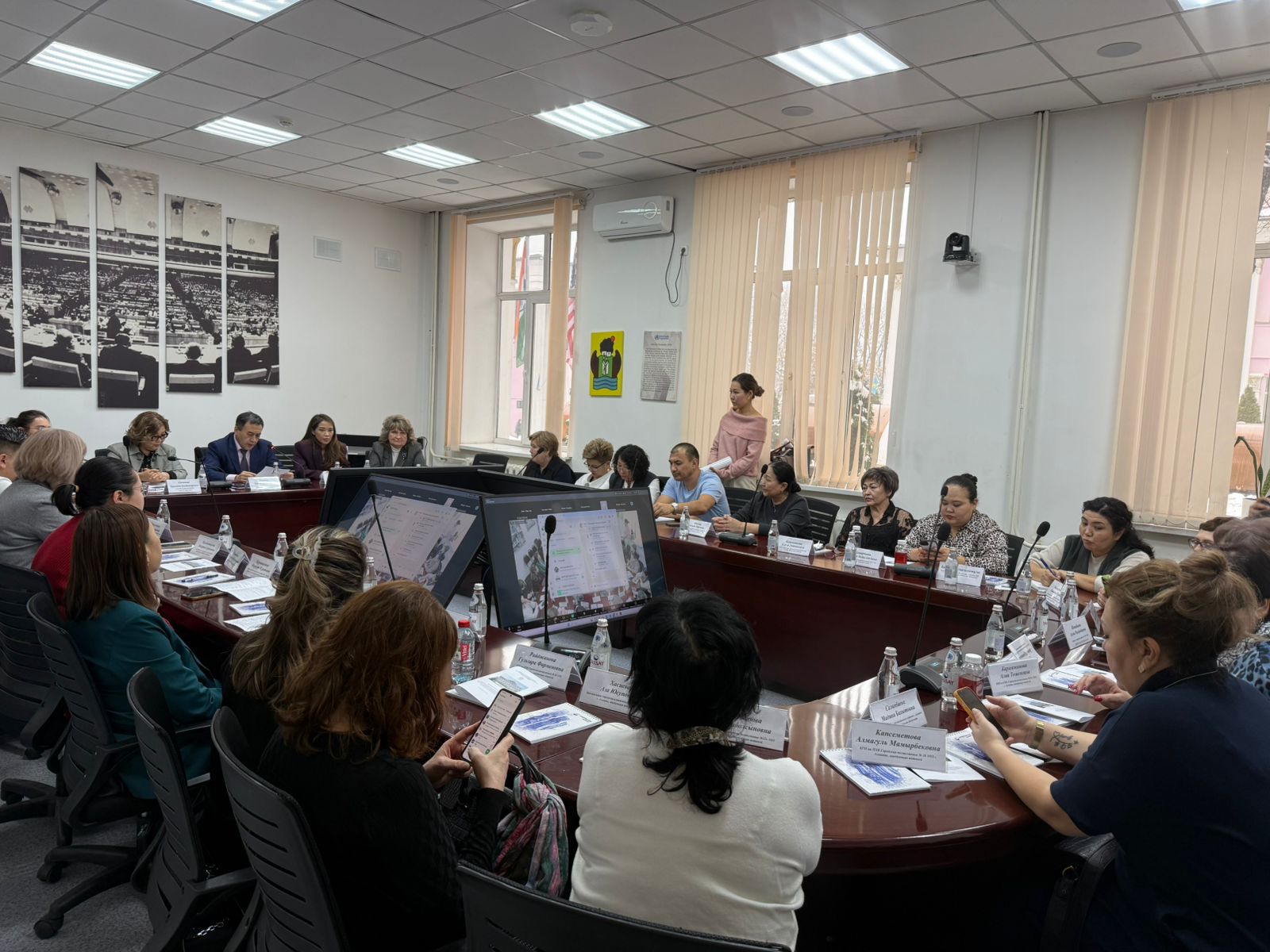
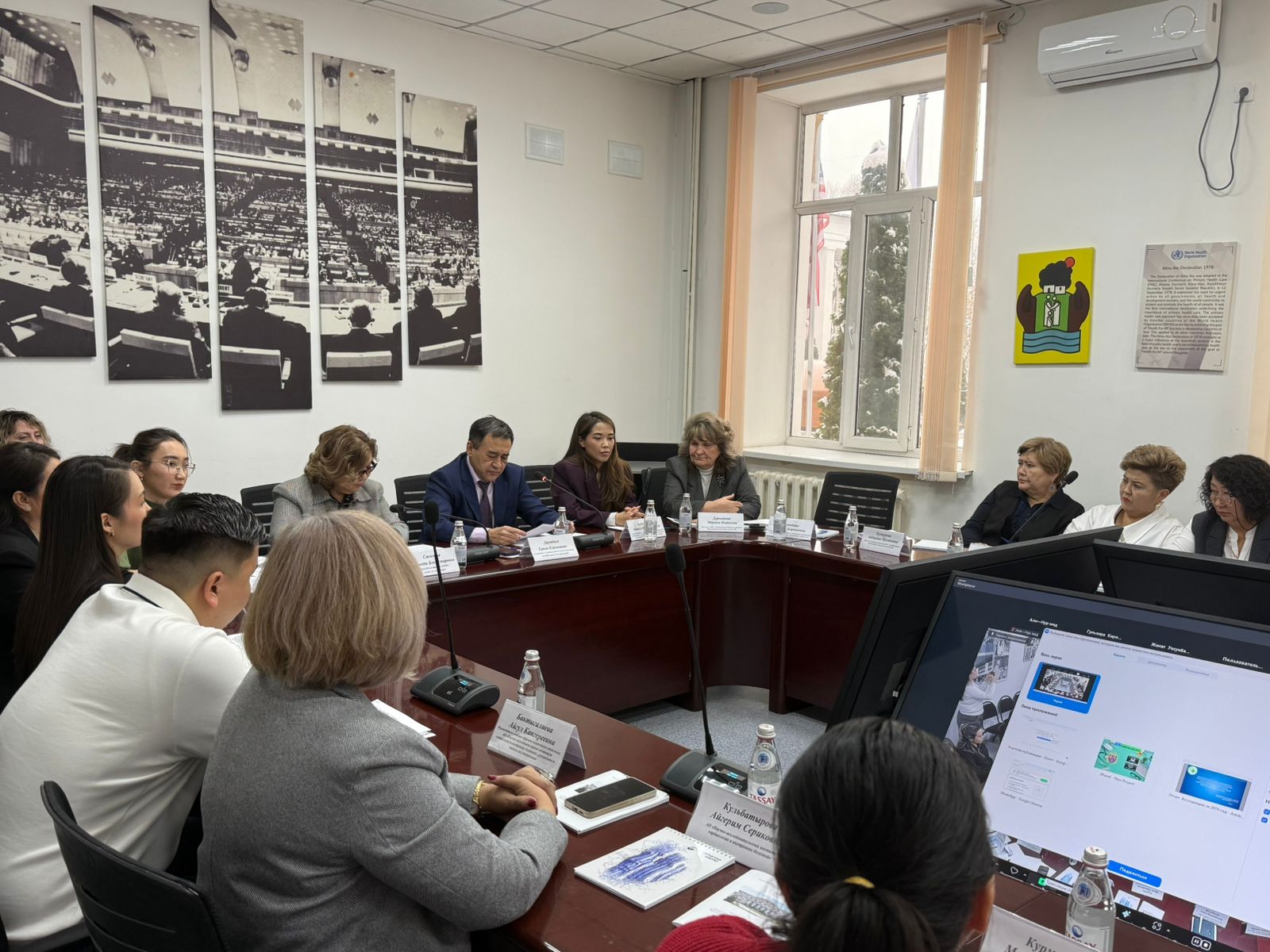
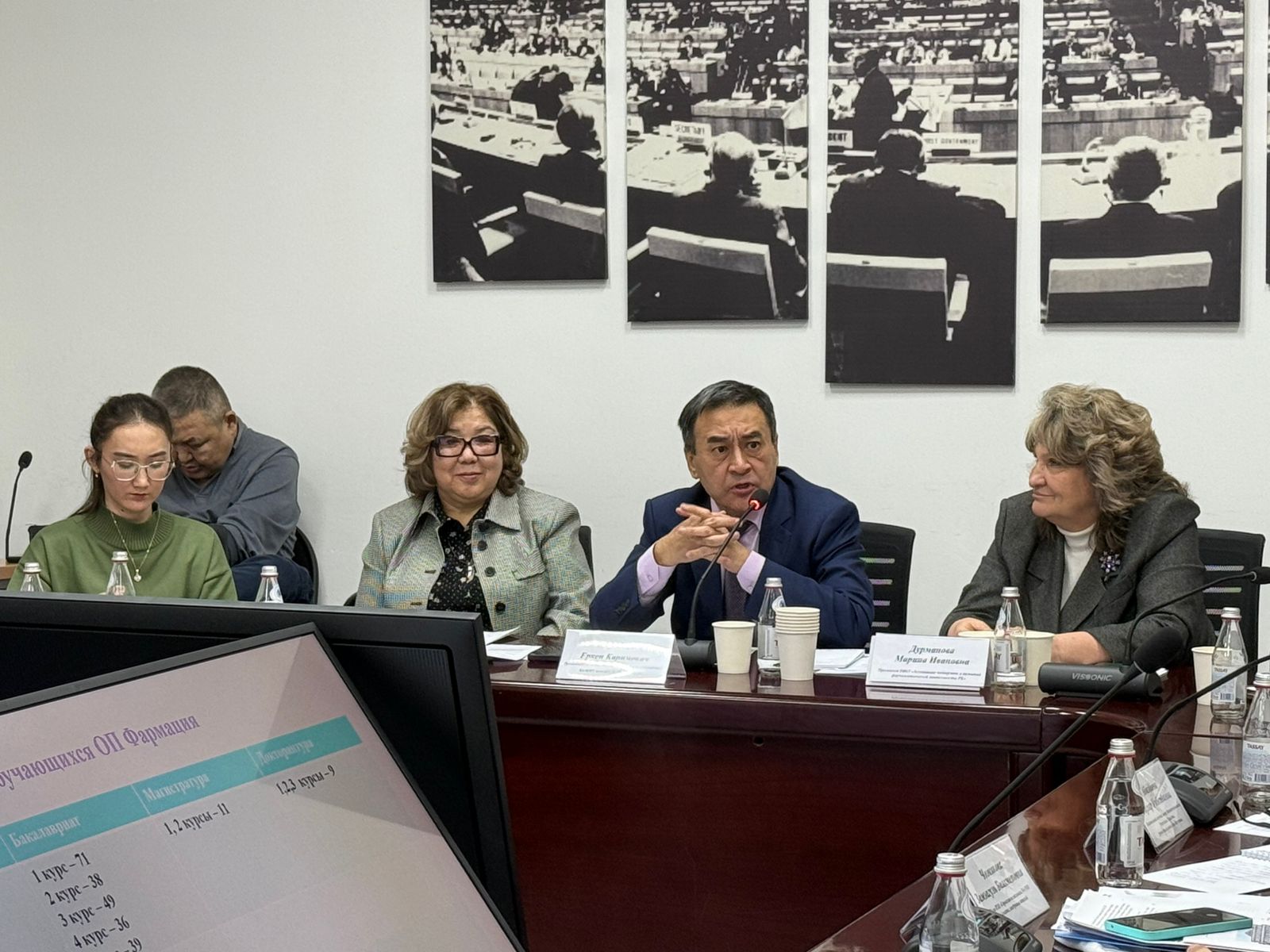
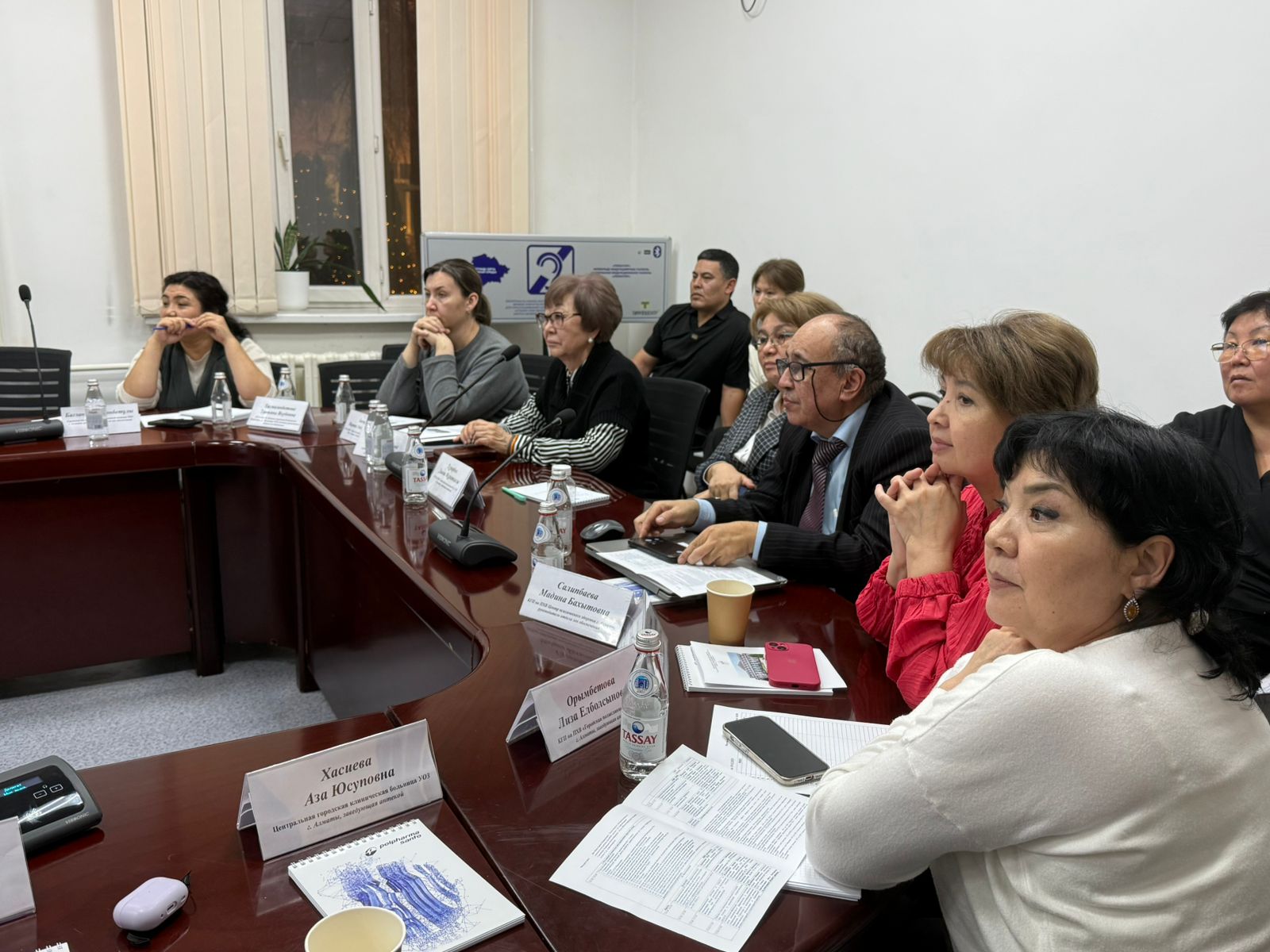
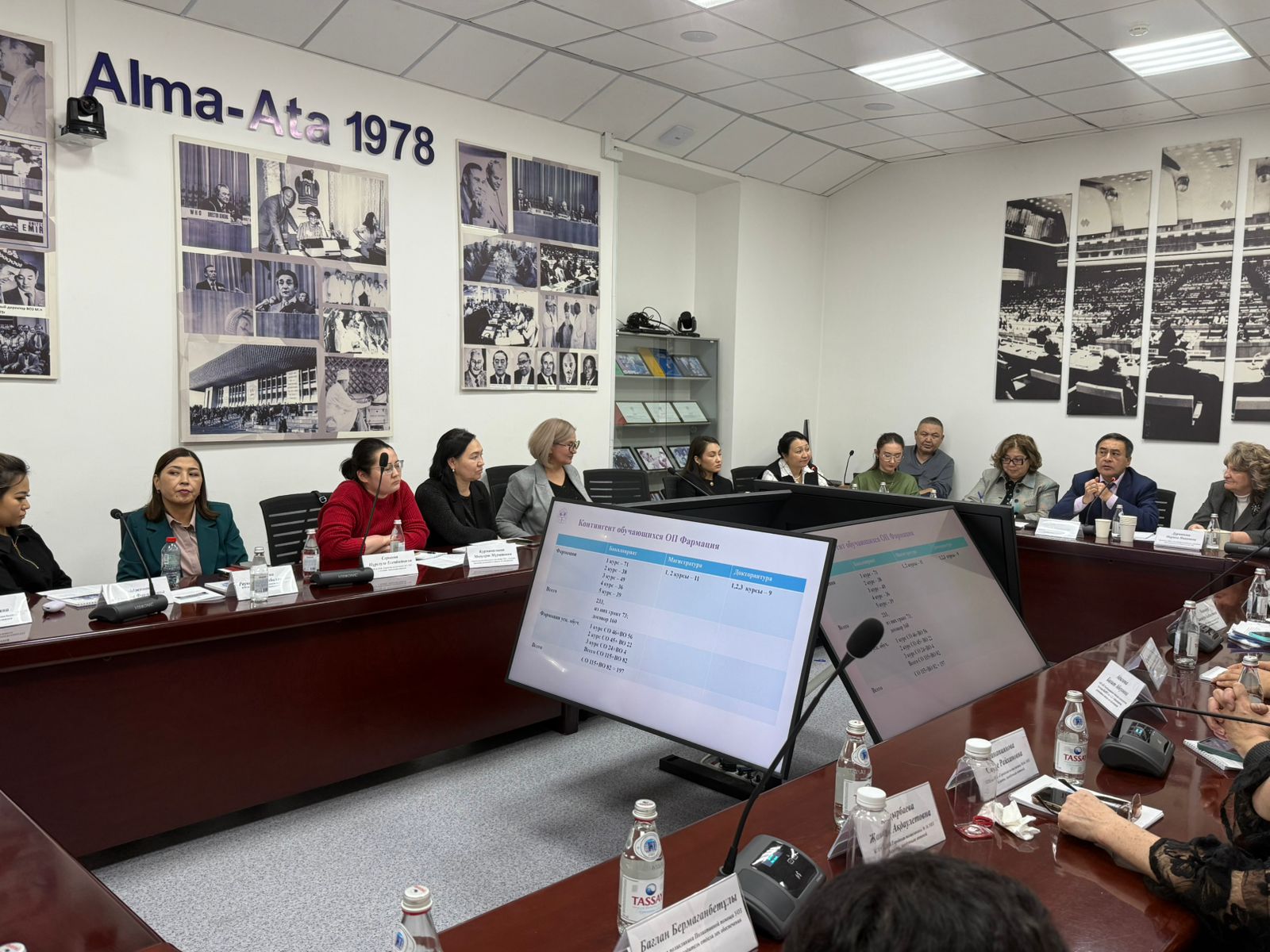
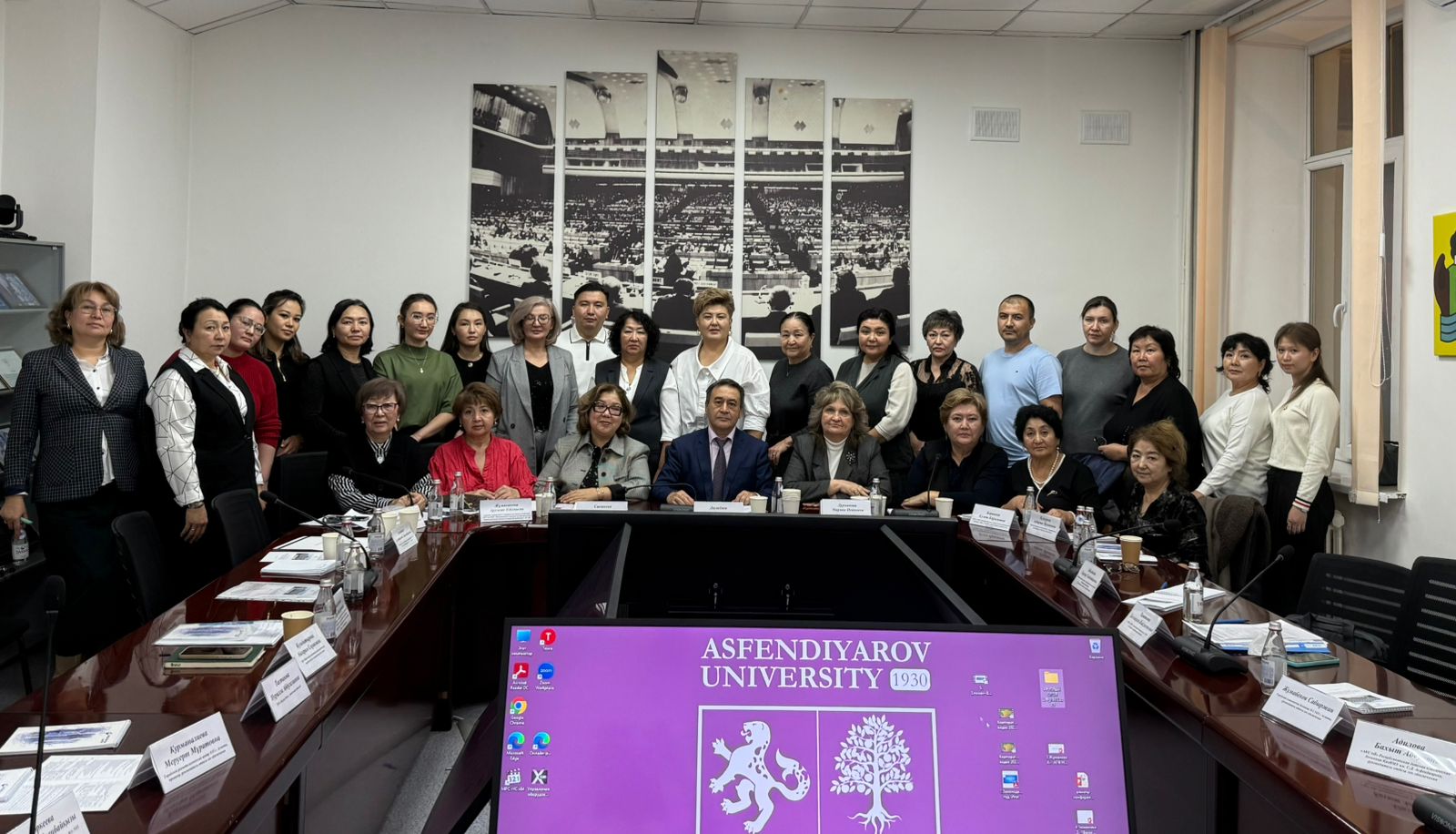
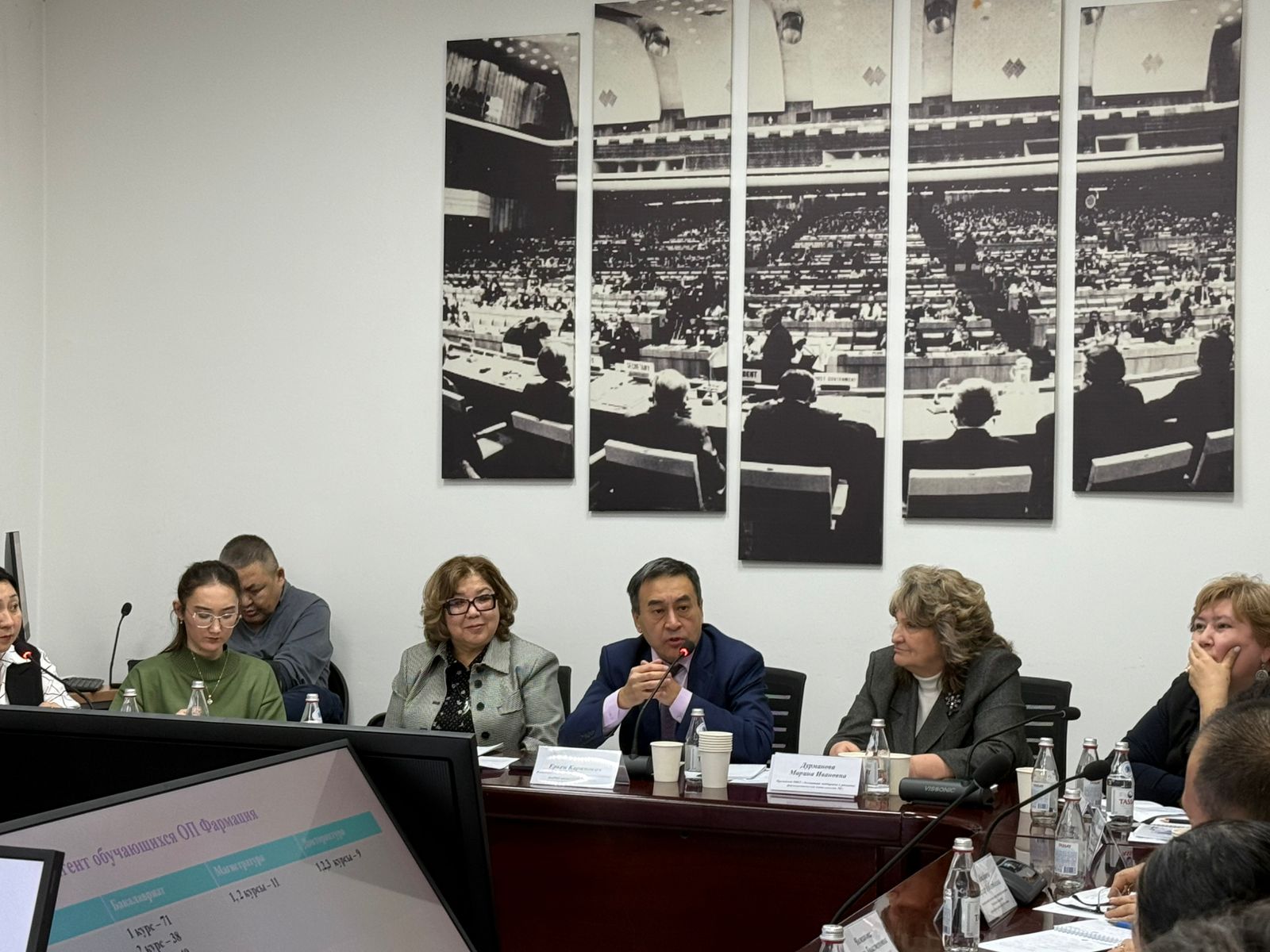
A roundtable discussion on drug provision in primary health care and inpatient care in the Republic of Kazakhstan and the training of specialists in the Pharmacy program for primary health care using modern approaches was held at the S.D. Asfendiyarov Kazakh National Medical University. The event was held in a hybrid format (in-person and remote) with a Zoom conference. The event was organized by Vice-Rector S.E. Sultangazieva, Head of the Clinical Department E.K. Dautbayev, and Dean of the School of Pharmacy Z.B. Sakipova. KazNMU comprises the following research organizations: the Kazakh Research Institute of Oncology and Radiology, the National Center for Obstetrics, Gynecology, and Perinatology, the National Center for Pediatrics and Pediatric Surgery, the Research Institute of Cardiology and Internal Medicine, the A.N. Syzganov National Scientific Center of Surgery, and four university clinics. The university collaborates with 113 clinical sites, making drug supply issues extremely relevant for the country’s leading medical university, which serves as a training ground for specialists in healthcare and pharmacy.
The event was held as part of a discussion of current drug supply issues related to the availability, quality, and safety of drug therapy, the efficient use of resources within the framework of compulsory social health insurance, and the training of specialists to provide drugs at the primary and inpatient care levels. The roundtable was attended by representatives of the Public Health Departments of Almaty and Shymkent, the Public Health Departments of Zhambyl, Kyzylorda, Almaty, and Zhetysu regions, the Salidat Kairbekova National Scientific Center for Healthcare Development (NSCHD), SK-Pharmacy LLC, the Association for the Support and Development of Pharmaceutical Activities (ASPD) of the Republic of Kazakhstan, five research institutes and scientific centers affiliated with KazNMU, the National Scientific Center of Phthisiopulmonology, the B. U. Dzharbusynov National Scientific Center of Urology, pharmaceutical companies, and faculty from the School of Pharmacy.
The event addressed key issues:
1.Legislation of the Republic of Kazakhstan in the field of healthcare. Normative legal acts governing the provision of drugs in the primary health care and inpatient (PHC) and inpatient care systems (Durmanova M.I. — President of the Association of Legal Entities «Association for the Support and Development of Pharmaceutical Activities of the Republic of Kazakhstan»);
- On the activities of the Single Distributor and procurement for 2025-2026 (A. M. Zholdasbaeva, Regional Manager, SK-Pharmacia LLP);
- Information systems in primary health care and hospitals. Types of electronic documents for prescribing and dispensing medications to patients (A. E. Zhumakhanova, Leading Specialist, Almaty City Branch of the Salidat Kairbekova National Scientific Center for Healthcare Development, Ministry of Health of the Republic of Kazakhstan);
- Working with electronic systems (E-Health) for dispensing and prescribing medications (Z. B. Chozhikova, Head of Pharmacy, State Enterprise No. 6, Health Department, Almaty);
- Hospital Pharmacy: Modern Approaches, the Role of the Clinical Pharmacist and Aspects of Social Pharmacy, Personalized Pharmacy. The Structure and Features of the Drug Supply System in Primary Health Care and Inpatient Care (Zhumabekov S., Head of the Drug Supply Department, Almaty City Clinical Hospital No. 4, Almaty Health Department; Baktygalieva A.K., Kulbatyrova A.S., Research Institute of Cardiology and Internal Medicine);
- Principles for Formulating a Correct Application. Rules for Compiling Annual and Supplemental Applications (Zhurynova A.O., Department for Assessing the Quality of Medical Care and Monitoring of Contractual Obligations, Chief Expert, Almaty Branch of the Federal Compulsory Medical Insurance Fund; 1st-year doctoral student, Kazakh National Medical University named after S.D. Asfendiyarov);
- Assessment of Drug Consumption at the Oncology Service Level: The Case of KazNIIOiR (Yesimova A.U., Pharmacy Manager, Kazakh Research Institute of Oncology and Radiology, Pharmacy Manager);
- Questions and Answers: Labeling and Traceability of Medicines (Davlyatov S. Kh., System Administrator, Almaty City Maternity Hospital No. 4);
- Training Pharmacists within the «Pharmacy» Program for Rational and Safe Medication Provision in Primary Health Care Using Modern Approaches, Clinical and Hospital Pharmacy, and Electronic Systems (Sakipova Z. B., Dean of the School of Pharmacy, S.D. Asfendiyarov Kazakh National Medical University; Tleubayeva M. I., Head of the «Pharmacy» Program).
The high level of engagement in the presentation discussions confirms the relevance of the roundtable’s topic: the speakers were asked over 40 questions. Practical aspects of medication provision in clinics and hospitals were discussed, including the experience of the 4th City Clinical Hospital and the Medical Center of the Presidential Administration of the Republic of Kazakhstan. Considerable attention was given to the Pharmacy educational program, noting the significant need for graduates of this specialty to work in medical institutions. They must possess skills in planning and accounting for medications, be proficient in 1C programs, and be able to work with databases.
Following the roundtable discussion, the participants noted:
- the role of the country’s leading medical university, S.D. Asfendiyarov Kazakh National Medical University, as a platform for exchanging practical experience, discussing problems and development prospects in the field of drug supply for medical organizations, training personnel, and improving the qualifications of specialists working in the drug supply system;
- the need to create a working group of specialists with experience in hospital pharmacy to exchange experiences and improve good practices;
- improving the training and advanced training of pharmaceutical personnel, taking into account modern practical healthcare requirements and the needs of employers;
- engaging hospital pharmacy specialists in the dual student training format;
- strengthening interdisciplinary interaction between medical and pharmaceutical specialists at the primary health care and inpatient care levels;
- the need to increase the number of grants from the Ministry of Health and local governments for the Pharmacy program.
Following the roundtable discussion, a resolution was adopted, and recommendations were prepared for updating educational programs, introducing elective courses, and improving interdisciplinary collaboration between medical and pharmaceutical specialists. Participants proposed creating a working group of experienced pharmaceutical specialists at medical institutions to analyze and share experiences.