World vaccine congress
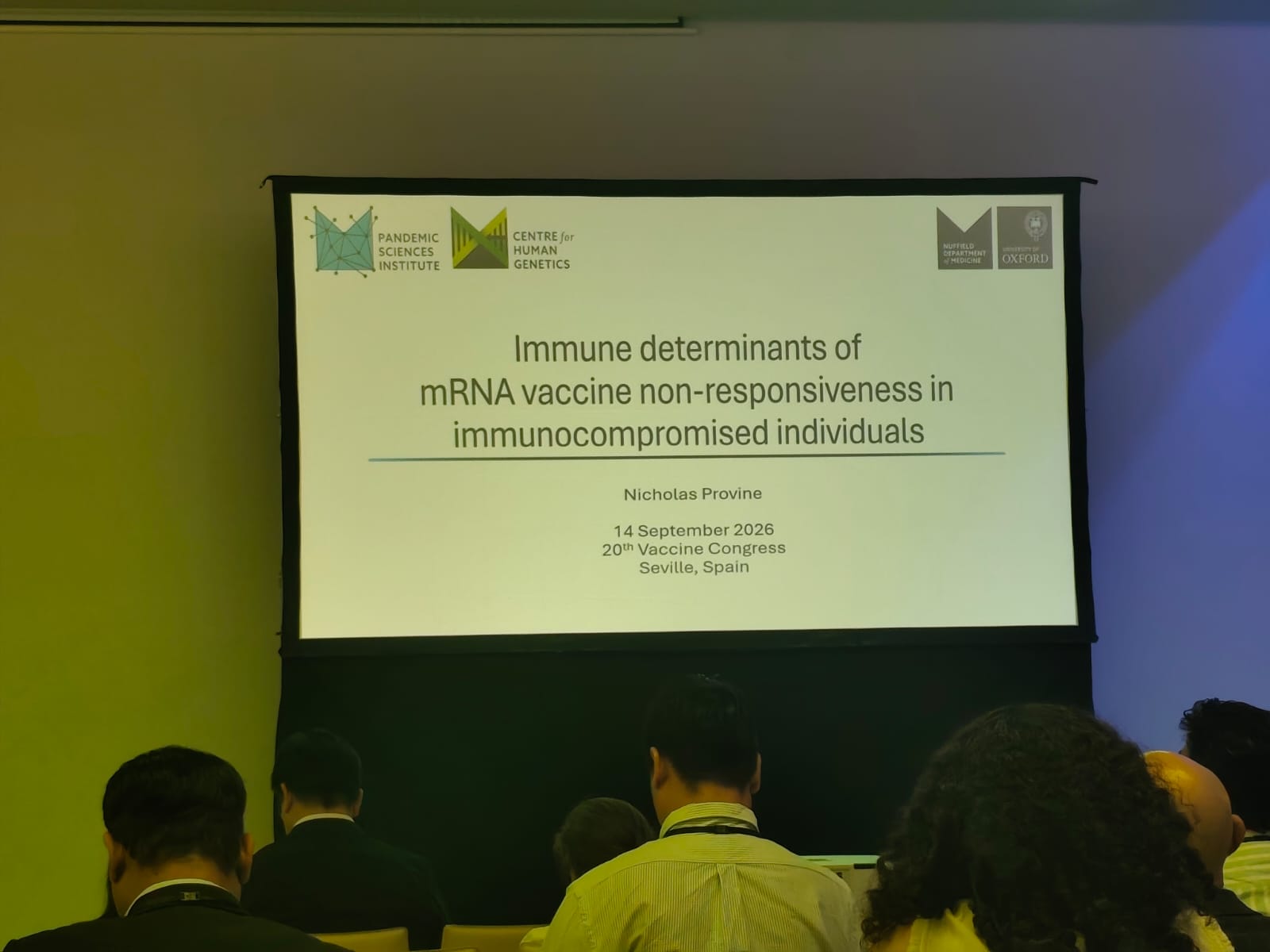
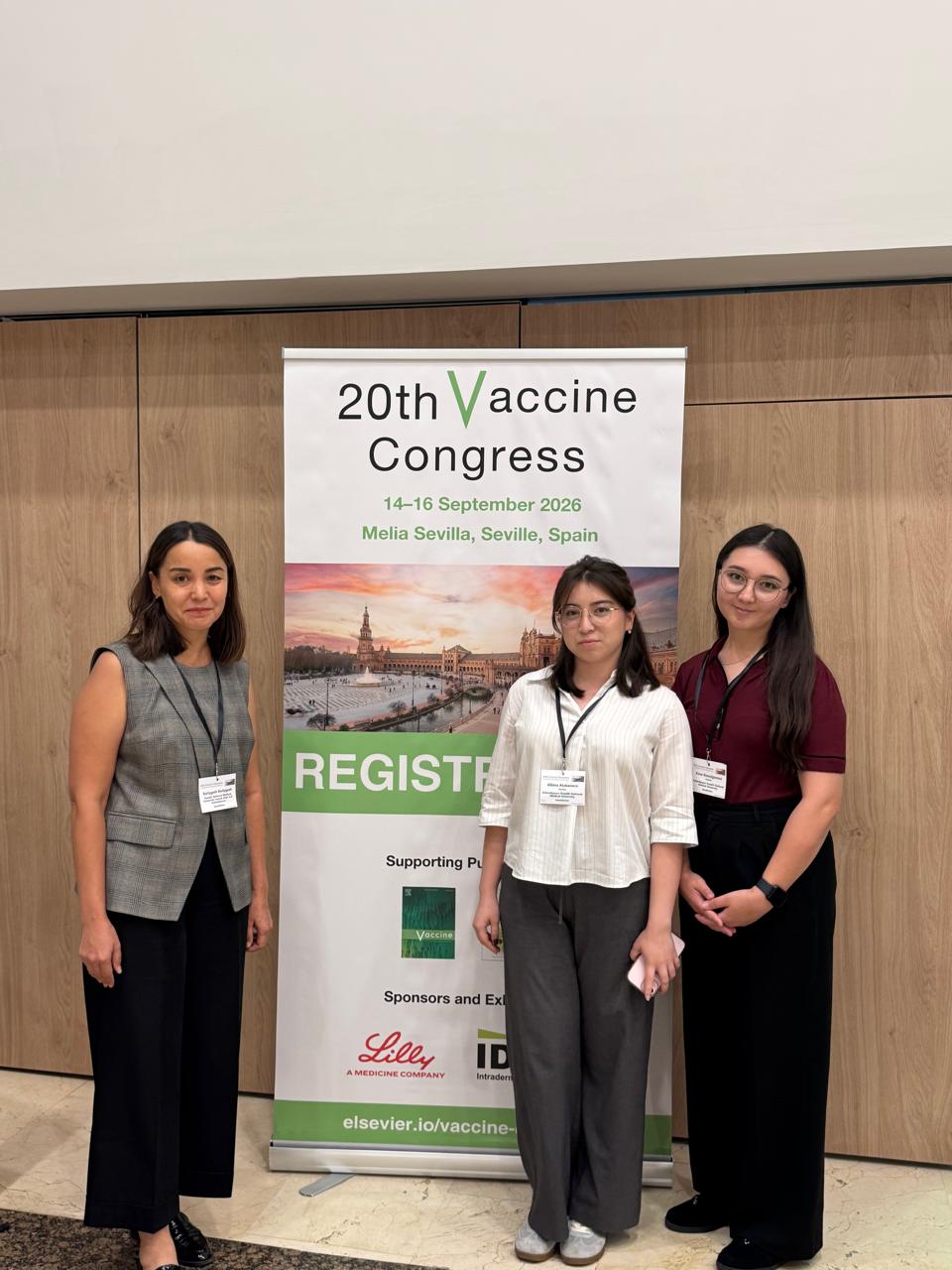
The 20th World Vaccine Congress took place on 14–16 September 2026 in Seville, Spain. The Congress serves as an important forum for discussing issues relating to all aspects of vaccine development and their use in the prevention of infectious diseases.
The conference posters and abstracts covered all aspects of vaccinology:
- systems vaccinology and artificial intelligence;
- vaccines against sexually transmitted infections;
- models for vaccine development and evaluation;
- paediatric vaccines;
- therapeutic anti-cancer vaccines;
- social and political implications of vaccination and vaccination policy;
- vaccines against respiratory pathogens;
- vaccines within the ‘One Health’ framework;
- vaccine safety;
- vaccines for older people and strategies to combat immunosenescence;
- vaccines, adjuvants and delivery technologies;
- vector-borne diseases;
- vaccine development worldwide;
- veterinary vaccines.
The congress programme included invited plenary lectures, oral presentations and poster sessions dedicated to the latest research in the field of vaccinology. It was prepared by a committee comprising world-leading scientists in their respective fields.
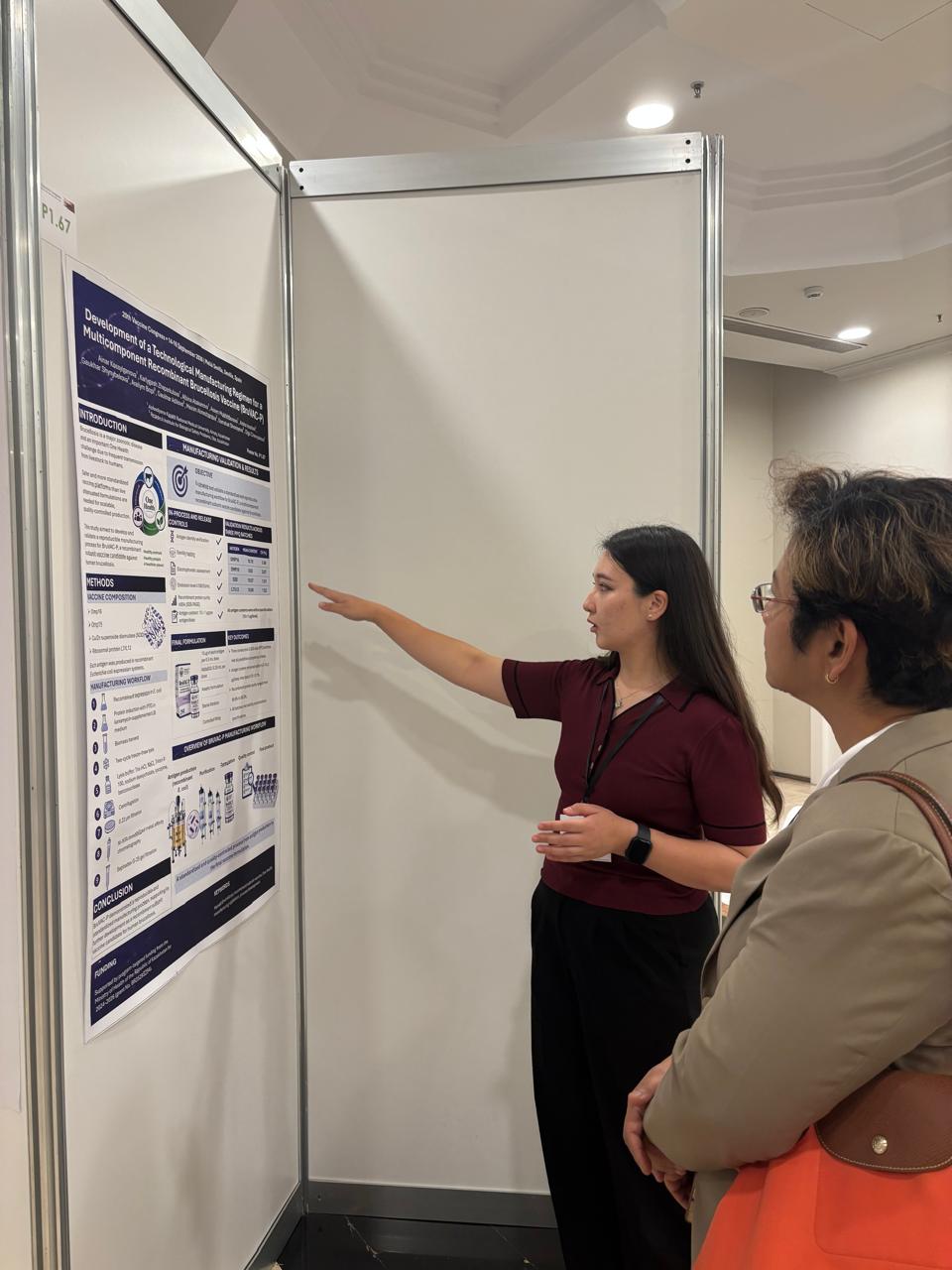
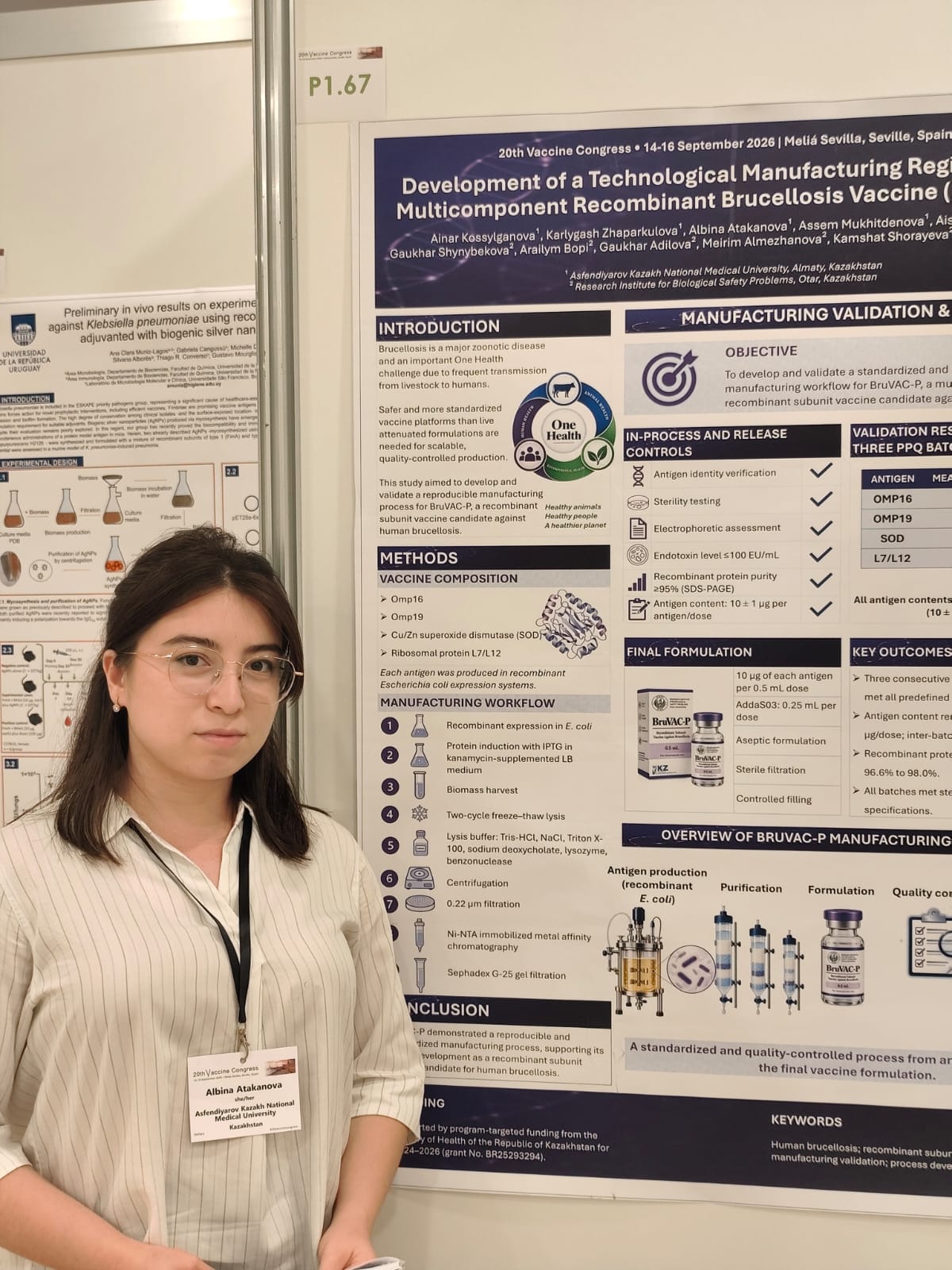
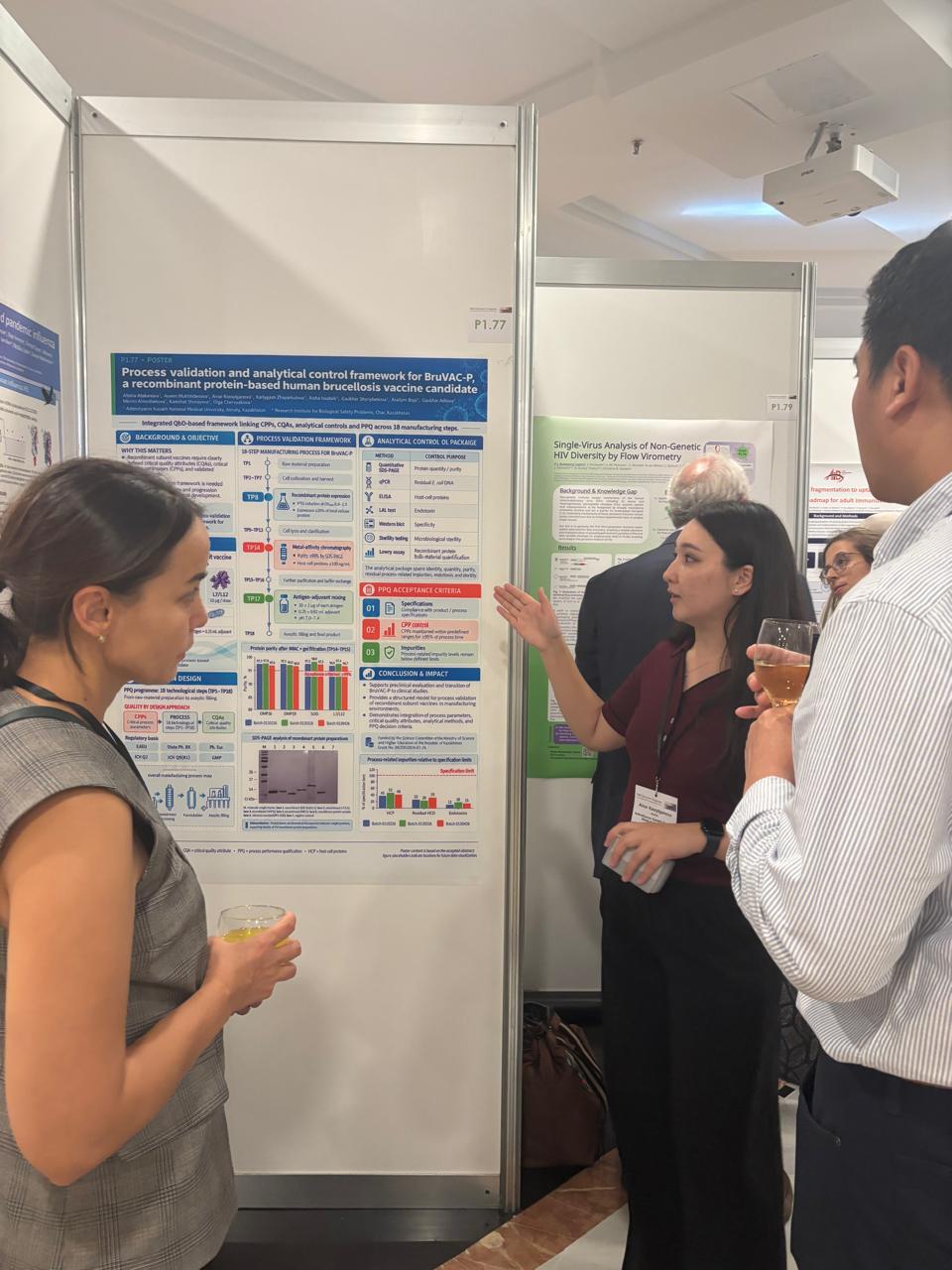
Staff members from the Department of Biotechnology and General Chemical Technology (GCT) at the School of Pharmacy, S.D. Asfendiyarov Kazakh National Medical University, presented poster presentations at the conference: Karlygash Altynbekovna Zhaparkulova, PhD in ‘Pharmaceutical Production Technology’, and Albina Amanovna Atakanova, Assistant Lecturer at the Department; and Ainar Erlankyz Kosylganova, Master of Medical Sciences and PhD student at the Department.
The reports were prepared based on the results of work carried out as part of the Ministry of Health of the Republic of Kazakhstan’s 2024–2026 PCF project IRN BR25293294, ‘A brucellosis vaccine based on genomic technologies’. The project is being carried out by members of a consortium which, alongside staff from the S.D. Asfendiyarov Kazakh National Medical University, includes staff from the Research Institute for Biological Safety Issues, ‘OtarBioPharm’ LLP and ‘NPP Antigen’ LLP.
The congress was very well organised. Topical issues and cutting-edge methods were presented by highly qualified speakers. Multicultural participation, panel and round-table discussions, and poster sessions provided significant opportunities for networking, discussion and planning the further development of scientific research and development work.
The poster presentations by representatives of the S.D. Asfendiyarov Kazakh National Medical University attracted the interest of conference participants. Colleagues interacted with many congress attendees, and contacts were established with a number of representatives from universities and research centres in Europe, the USA and Asia.