Lecture on ‘The Impact of Pathogenic Biological Agents on Ecosystems in Industrial Settings: Risk Assessment and Biosafety Measures’
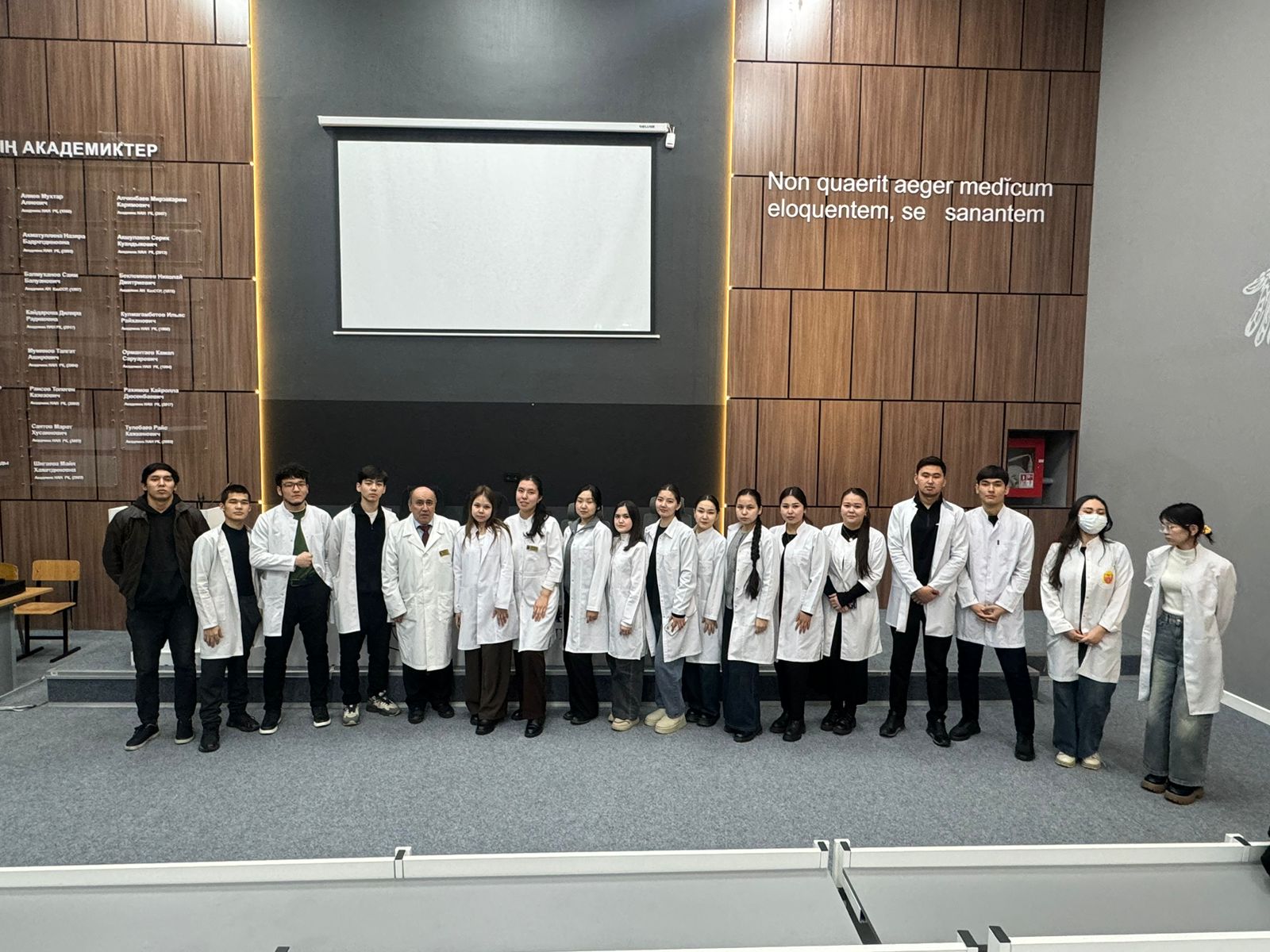
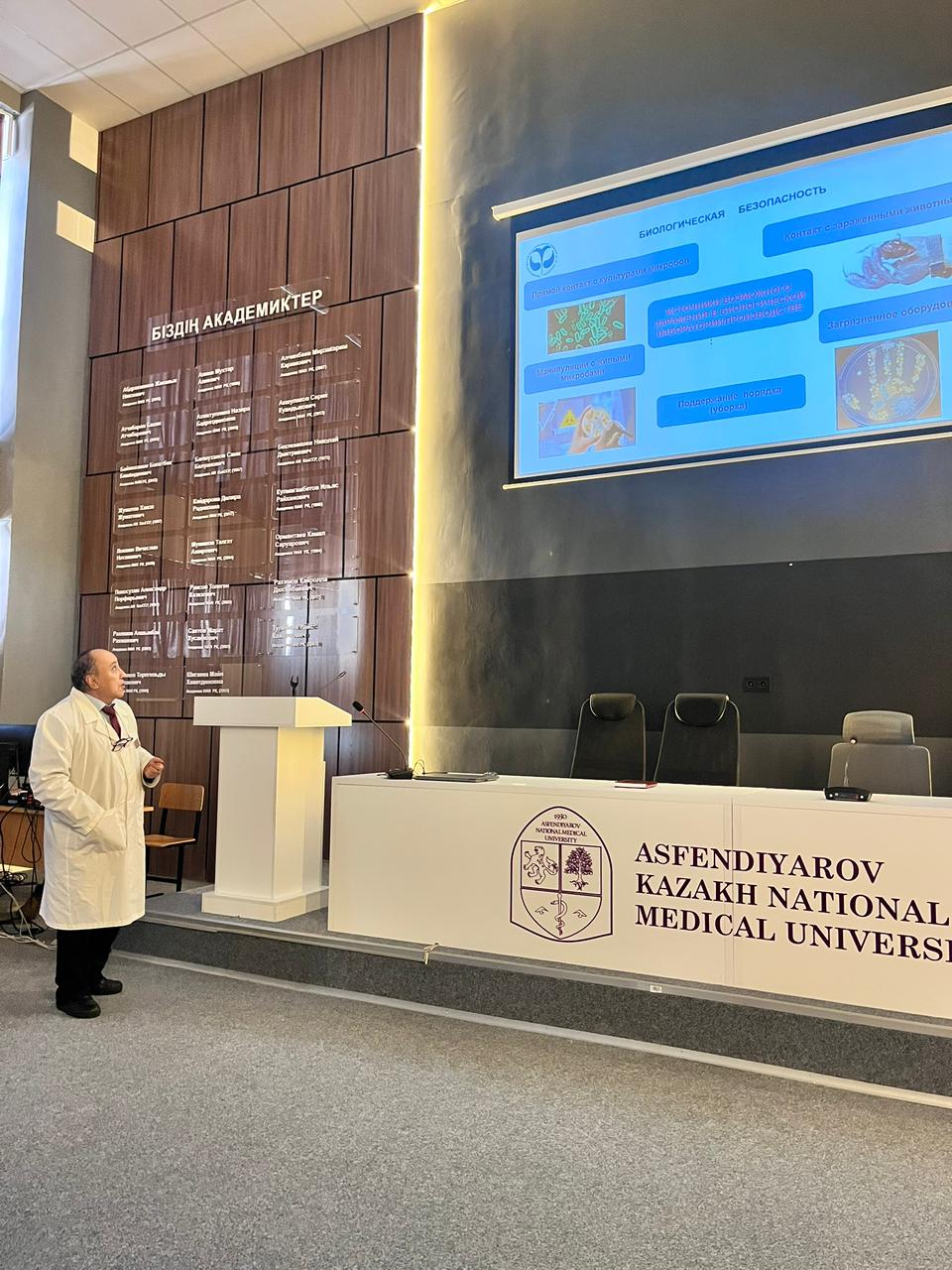
On 13 March 2026, an open lecture on the topic “The impact of pathogenic biological agents on the ecosystem in industrial settings: risk assessment and biosafety measures” was held in the “Academics’ Hall”. The event, organised by the School of Pharmacy at the S.D. Asfendiyarov Kazakh National Medical University, was attended by undergraduates, postgraduates, doctoral students and academic staff. The lecture was delivered by Marat Kamytbekovich Suleimenov, Candidate of Biological Sciences and Associate Professor (without academic rank) at the Department of Biotechnology and General Chemical Technology.
The event was held as part of the implementation of the principles of sustainable development and the Sustainable Development Goals, and was aimed at equipping students on the ‘Pharmacy’ and ‘Pharmaceutical Production Technology’ programmes with knowledge regarding the impact of pathogenic biological agents on the ecosystem, risk assessment methods, and measures to ensure biological safety in production environments.
Pathogenic biological agents (PBAs) are microorganisms and biological structures capable of causing disease in humans, animals or plants. These include: bacteria, viruses, fungi, protozoa, helminths and toxins of biological origin.
Pathogenic biological agents pose a serious threat to ecosystems and human health if they spread uncontrollably in industrial settings. An effective risk assessment system and strict biosafety measures make it possible to minimise environmental impact and prevent ecological and epidemiological consequences.
In industrial settings, PBAs may arise or be used in the following sectors:
- the biotechnology industry (production of biological products and cultivation of microorganisms);
- pharmaceutical companies;
- agriculture and livestock farming;
- laboratories and research centres;
- the food industry.
The main routes by which PBAs enter the environment:
- air emissions;
- wastewater;
- contaminated waste;
- contact with contaminated animals or materials.
The impact of pathogenic biological agents can affect the ecosystem in industrial settings. It is important for a company to protect its manufactured products, staff and the environment from contamination by pathogenic biological agents.
To this end, biological risk assessments are carried out and measures are taken to ensure biosafety in the workplace.
The risk assessment consists of three stages:
- hazard identification – determining the type of microorganism and its pathogenicity;
- exposure analysis – probability of contact, routes of transmission and the microorganism’s persistence;
- consequence assessment – impact on human, animal and plant health, and environmental damage.
The biosafety system is designed to prevent the release of PBAs and minimise risks. It includes:
- еngineering controls – containment laboratories, air filtration systems, waste sterilization;
- organisational controls – access control, staff training, monitoring of biological risks;
- personal protective equipment – protective clothing, respirators, gloves and safety goggles;
- waste disposal – autoclaving, chemical disinfection, safe storage and transport.
Participants listened with interest to the lecture and discussed issues relating to biosafety at pharmaceutical companies.