A Series of Lectures for Medical Residents Conducted at South Kazakhstan Medical Academy within the Academic Mobility Program
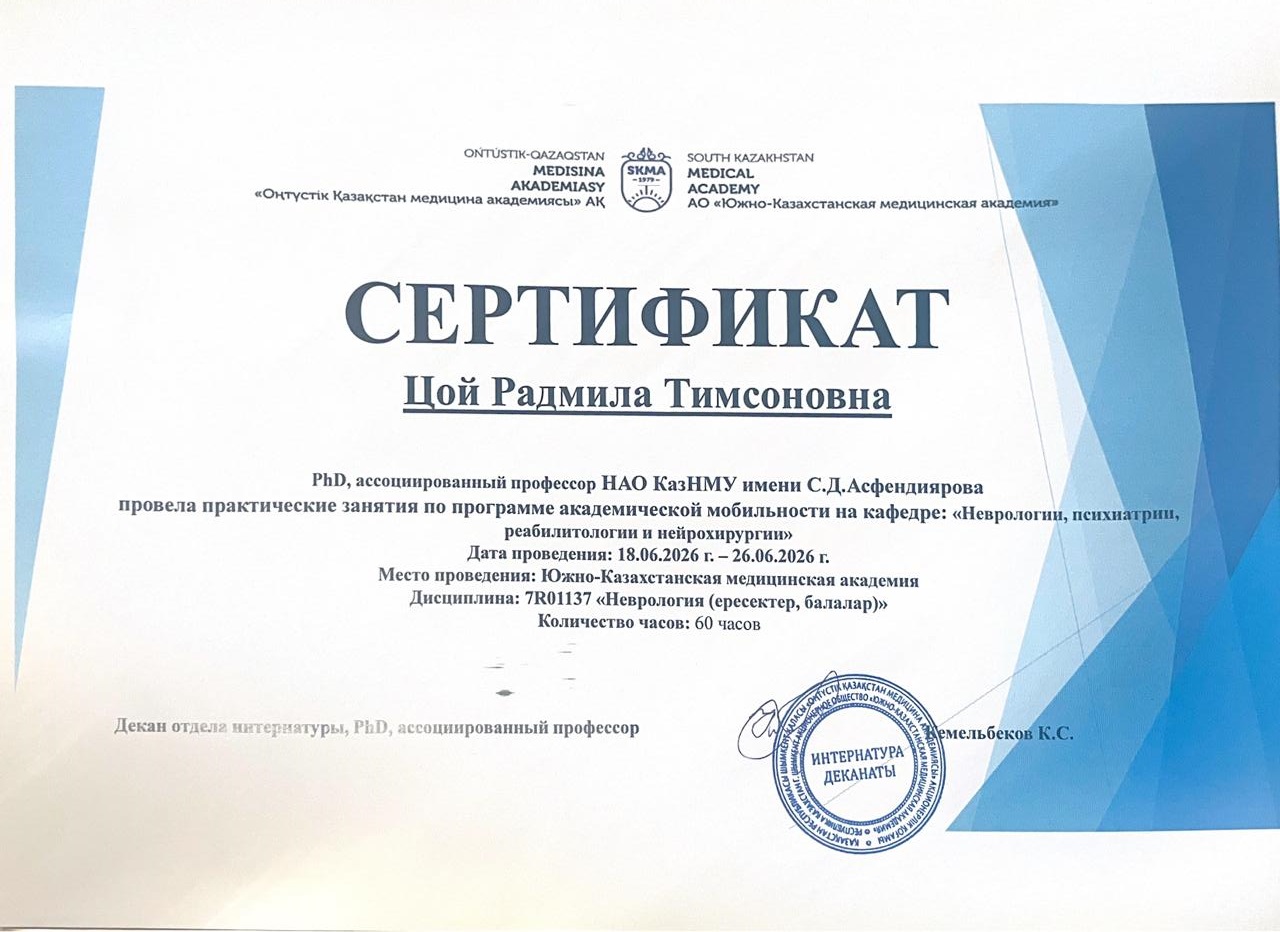
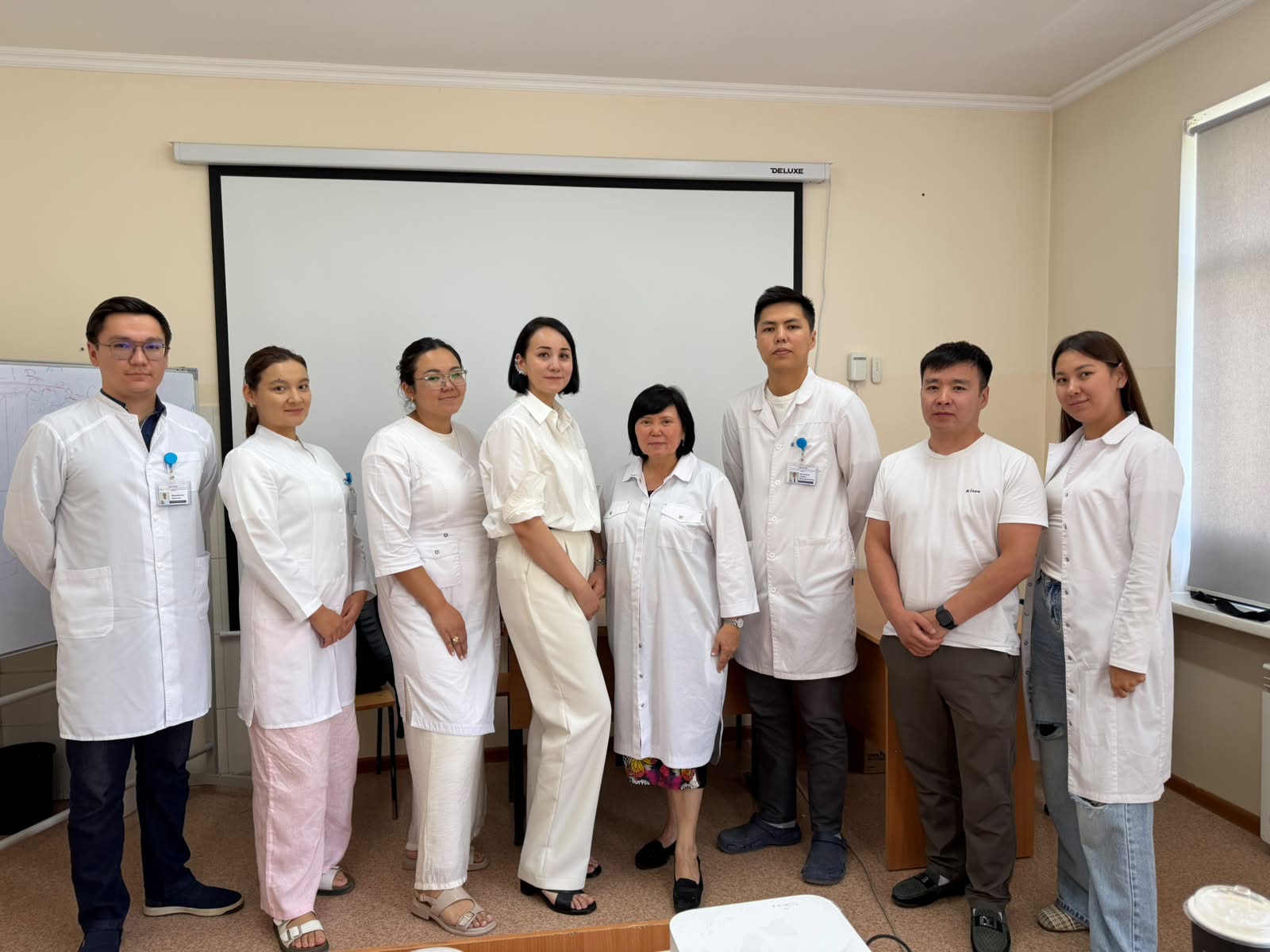
From 18 to 26 June 2026, a series of lectures and practical training sessions was delivered for medical residents at the Department of Neurology, Psychiatry and Rehabilitation of South Kazakhstan Medical Academy as part of the Academic Mobility Program. The educational activities were conducted by Radmila T. Tsoy, MD, PhD, Associate Professor of the Department of Nervous Diseases, Asfendiyarov Kazakh National Medical University.
The educational program focused on current issues in clinical neurology and was based on the principles of evidence-based medicine and contemporary international clinical guidelines.
The lecture series addressed the following topics:
- modern approaches to the diagnosis and management of neurodegenerative diseases;
- early recognition of cognitive impairment and strategies for dementia prevention;
- childhood vaccination from the perspective of a neurologist, including current scientific evidence, indications, contraindications, and frequently encountered clinical concerns;
- discussion of complex clinical cases with emphasis on diagnostic algorithms, differential diagnosis, and evidence-based decision-making in neurological practice.
Special attention was given to the critical appraisal of contemporary scientific literature, international clinical recommendations, and their practical implementation in routine neurological care.
The educational sessions were conducted in an interactive format, incorporating clinical case discussions, professional exchange of experience, and evidence-based problem-solving. This approach promoted the development of clinical reasoning skills and strengthened the professional competencies of neurology residents.
The successful implementation of the lecture series was made possible through the support of Professor Nazira Asanovna Zharkynbekova, Head of the Department of Neurology, Psychiatry and Rehabilitation at South Kazakhstan Medical Academy. Her leadership, commitment to postgraduate medical education, and dedication to fostering academic collaboration created an excellent environment for professional exchange and knowledge sharing.
Academic mobility programs play a significant role in strengthening collaboration among medical universities in the Republic of Kazakhstan, facilitating the exchange of advanced scientific knowledge and clinical expertise, promoting the implementation of international educational standards, and enhancing the quality of postgraduate medical education and specialist training.