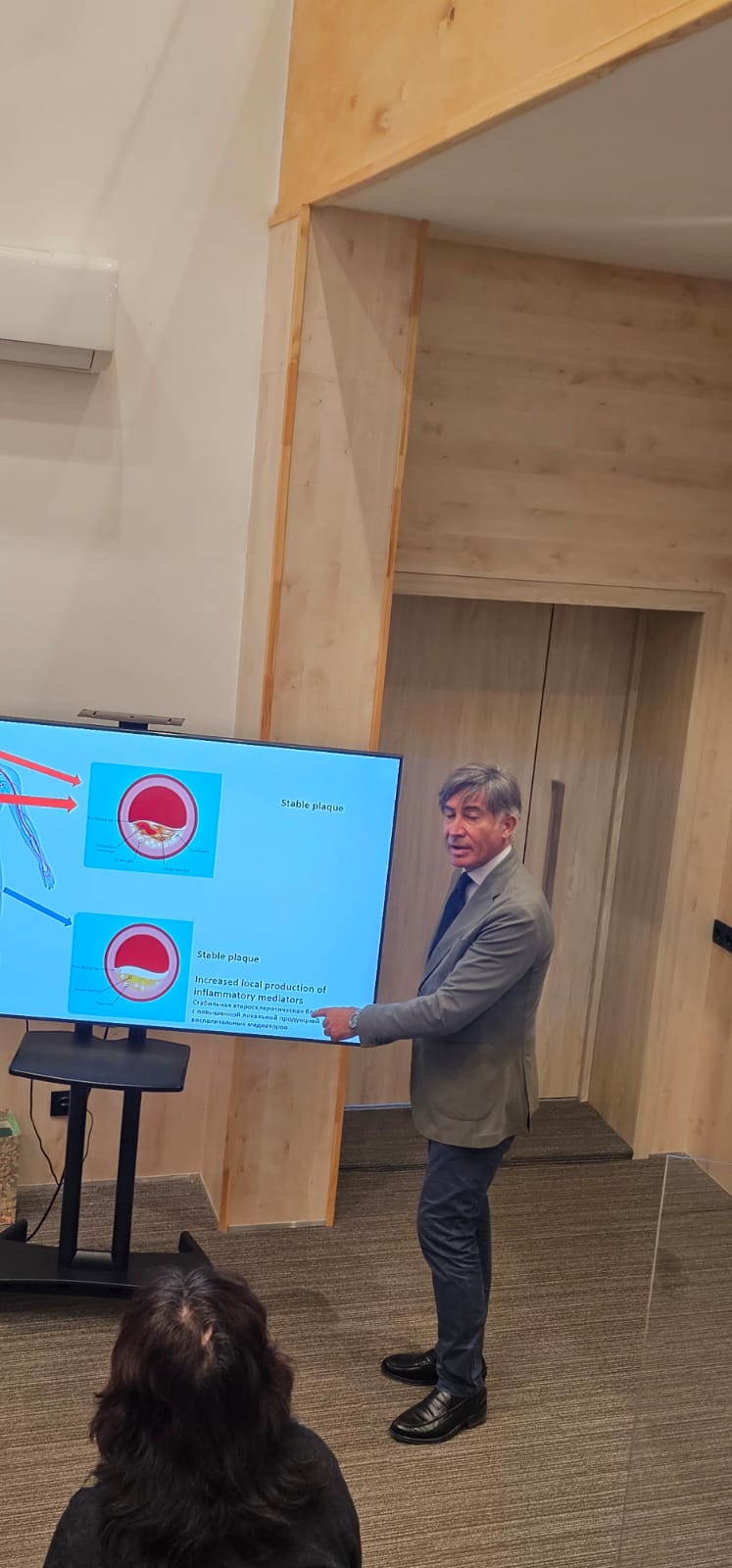
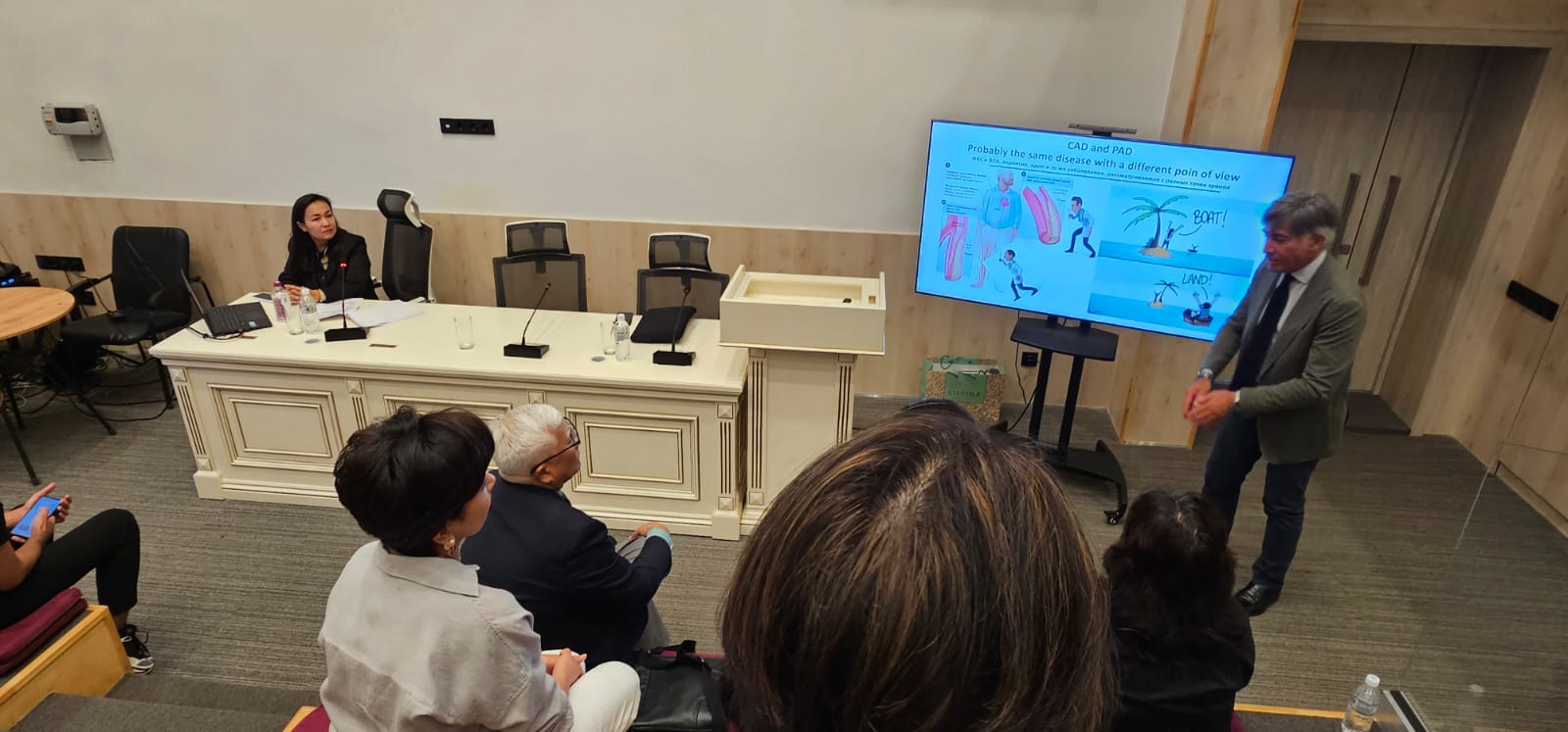
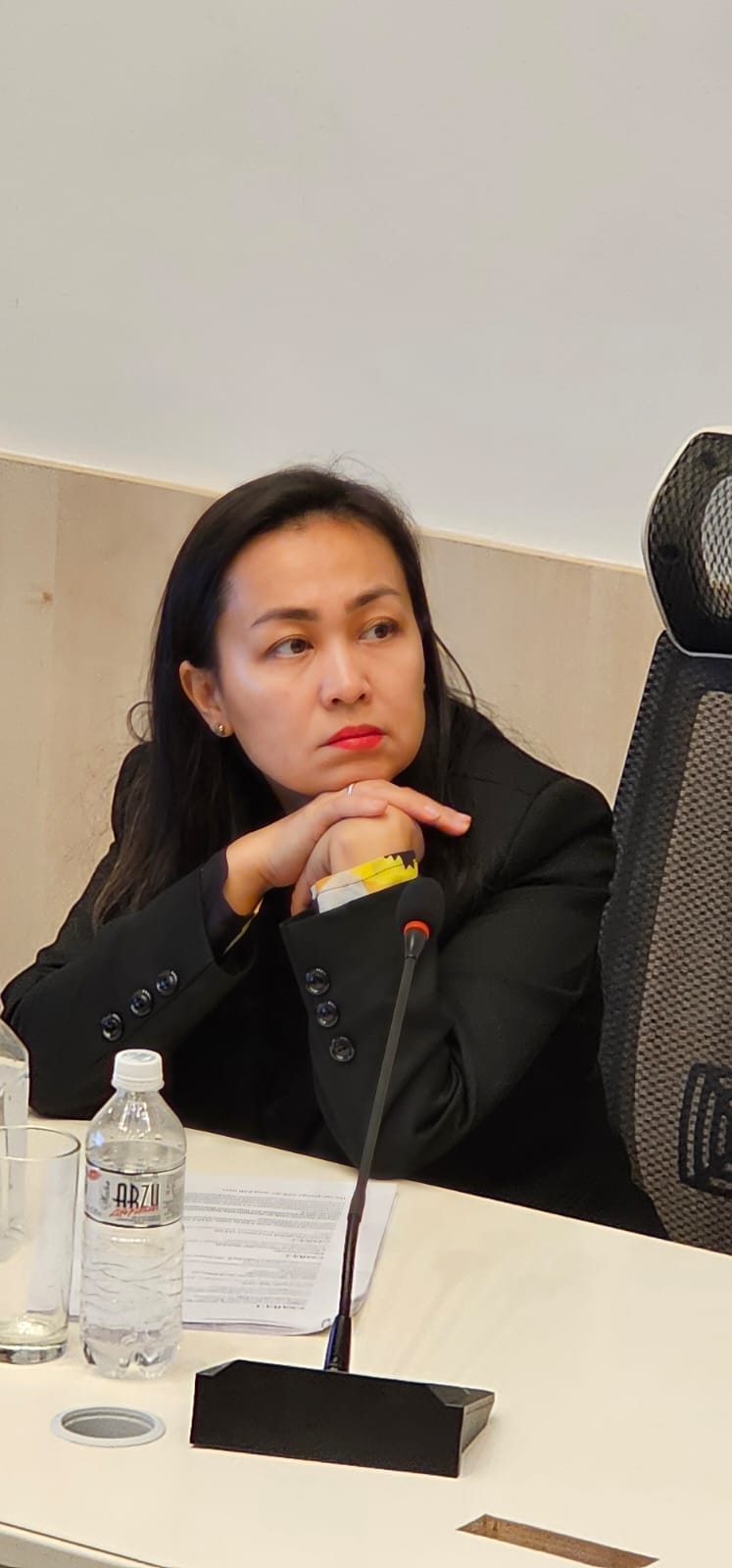
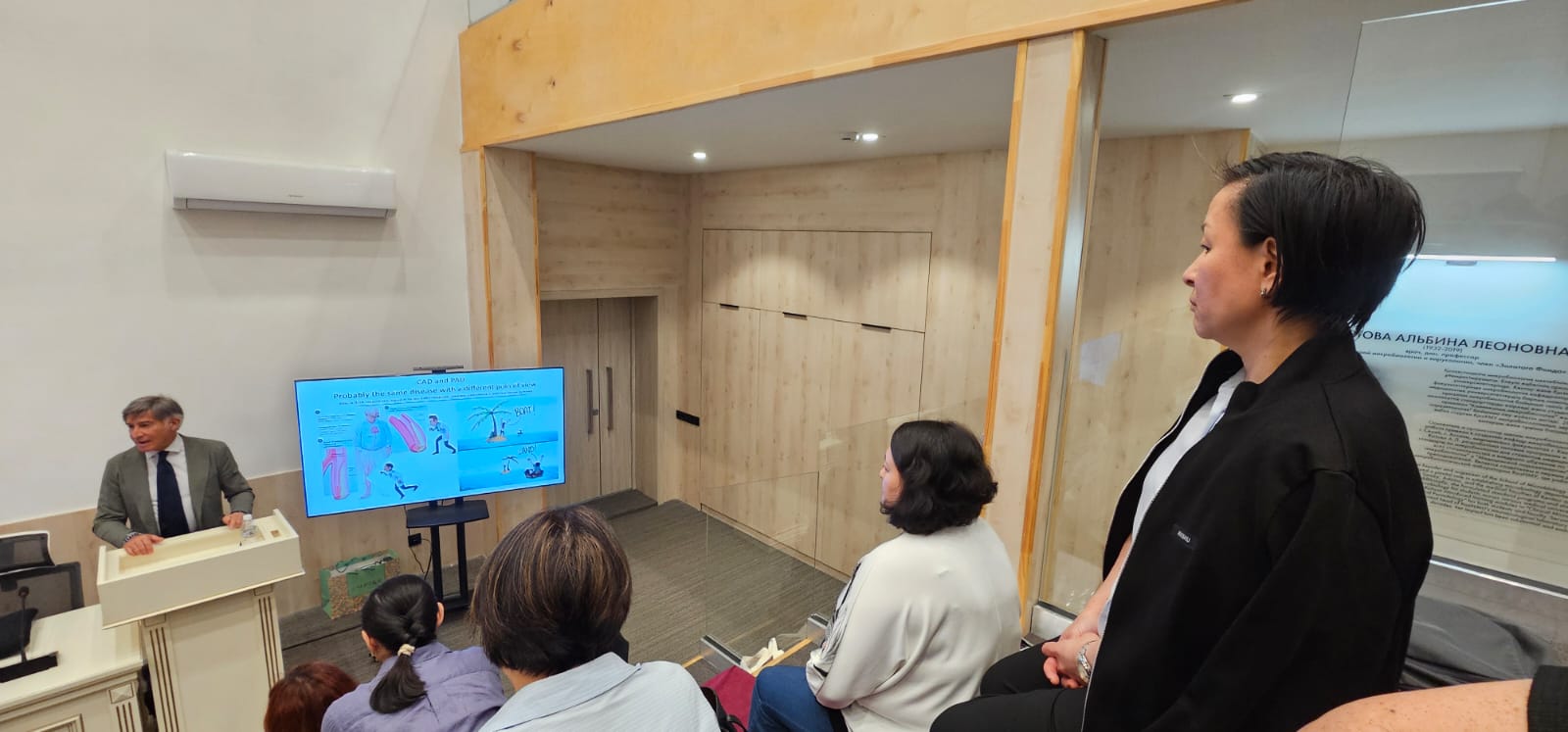
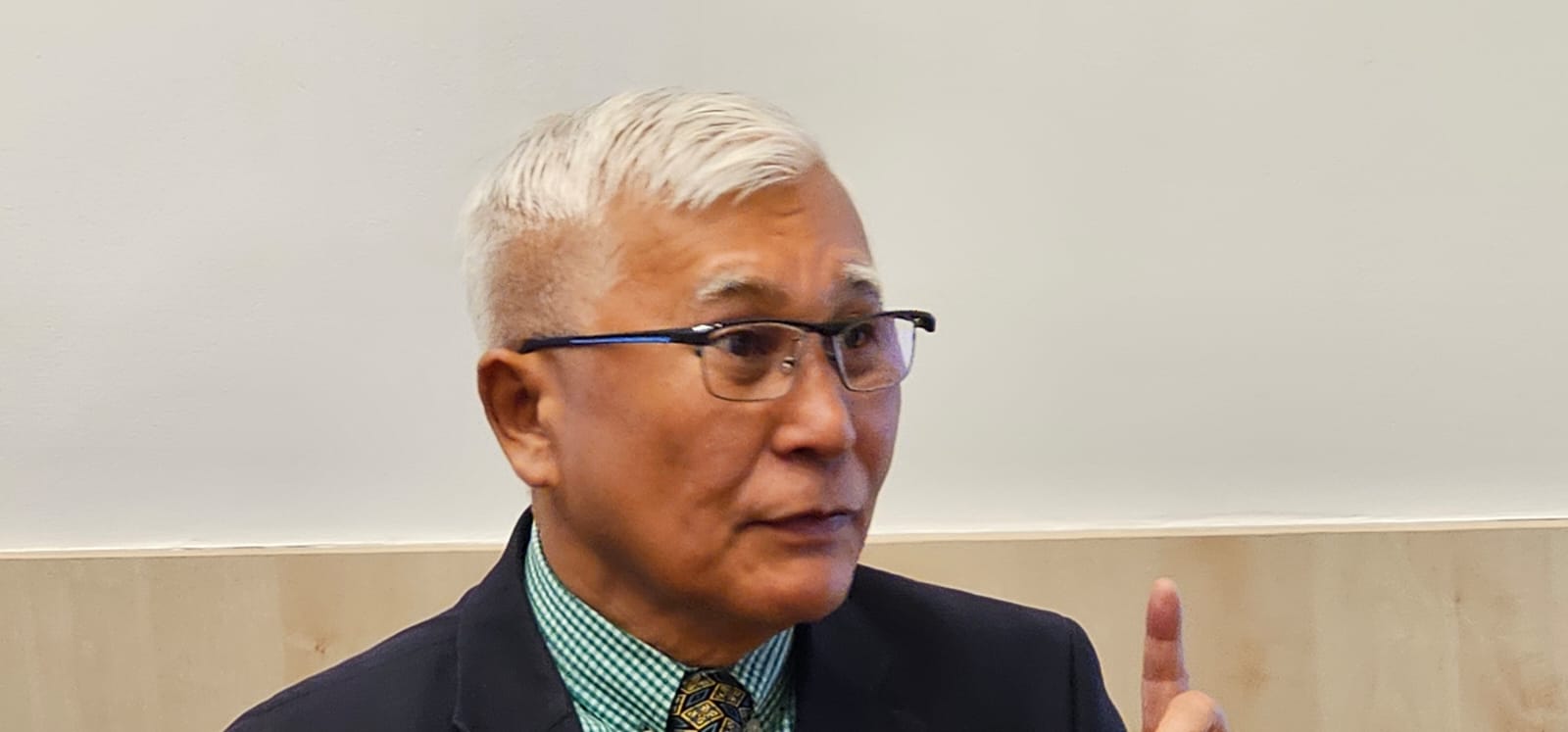
Professor Plinio Cirillo delivered a series of lectures on modern cardiology at KazNMU
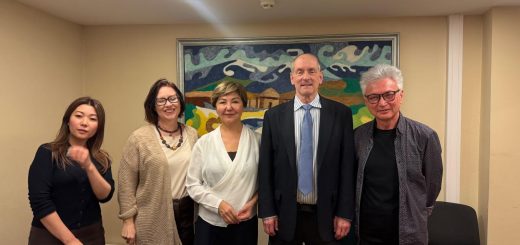
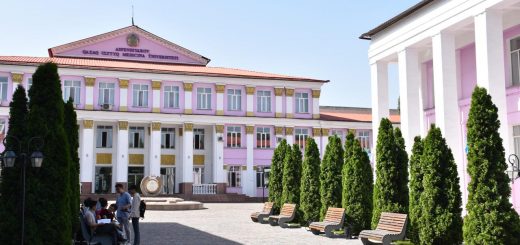
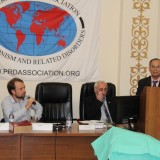
From May 18 to May 22, 2026, Kazakh National Medical University named after S.D. Asfendiyarov hosted a visiting professor from Italy — Plinio Cirillo.
Particular interest was attracted by the lecture:
“Exposome: a newer CV risk Factor in the modern Times”
— “Exposome: a New Risk Factor for Cardiovascular Diseases in Modern Times”
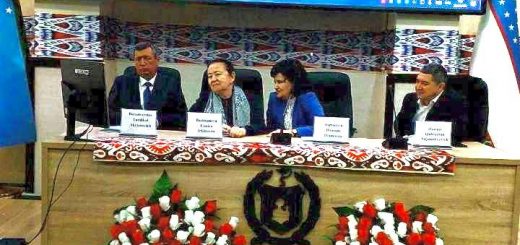
(translation by Professor Sugraliev A.B., Head of the Department of Internal Diseases of KazNMU)
The following актуal lectures were also presented:
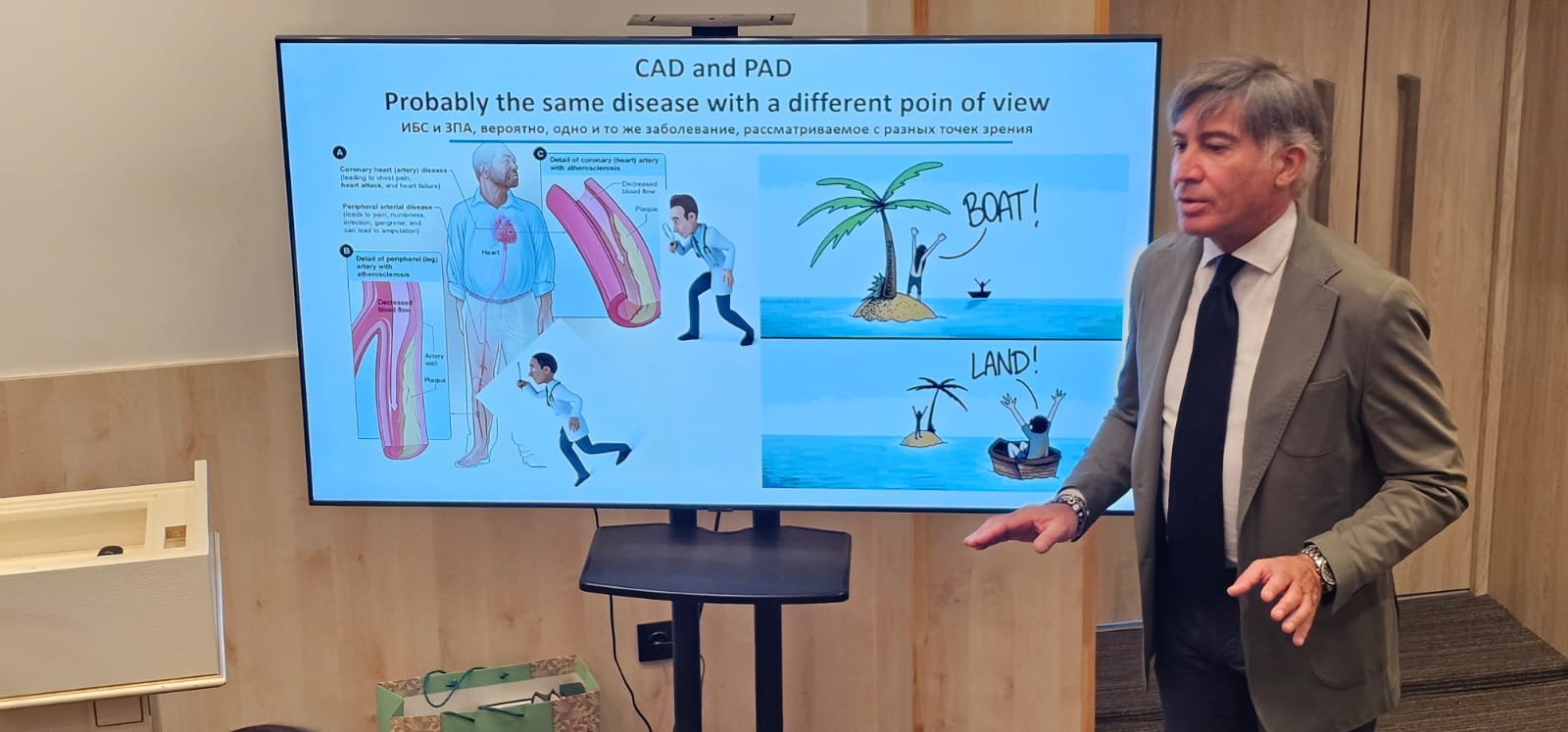
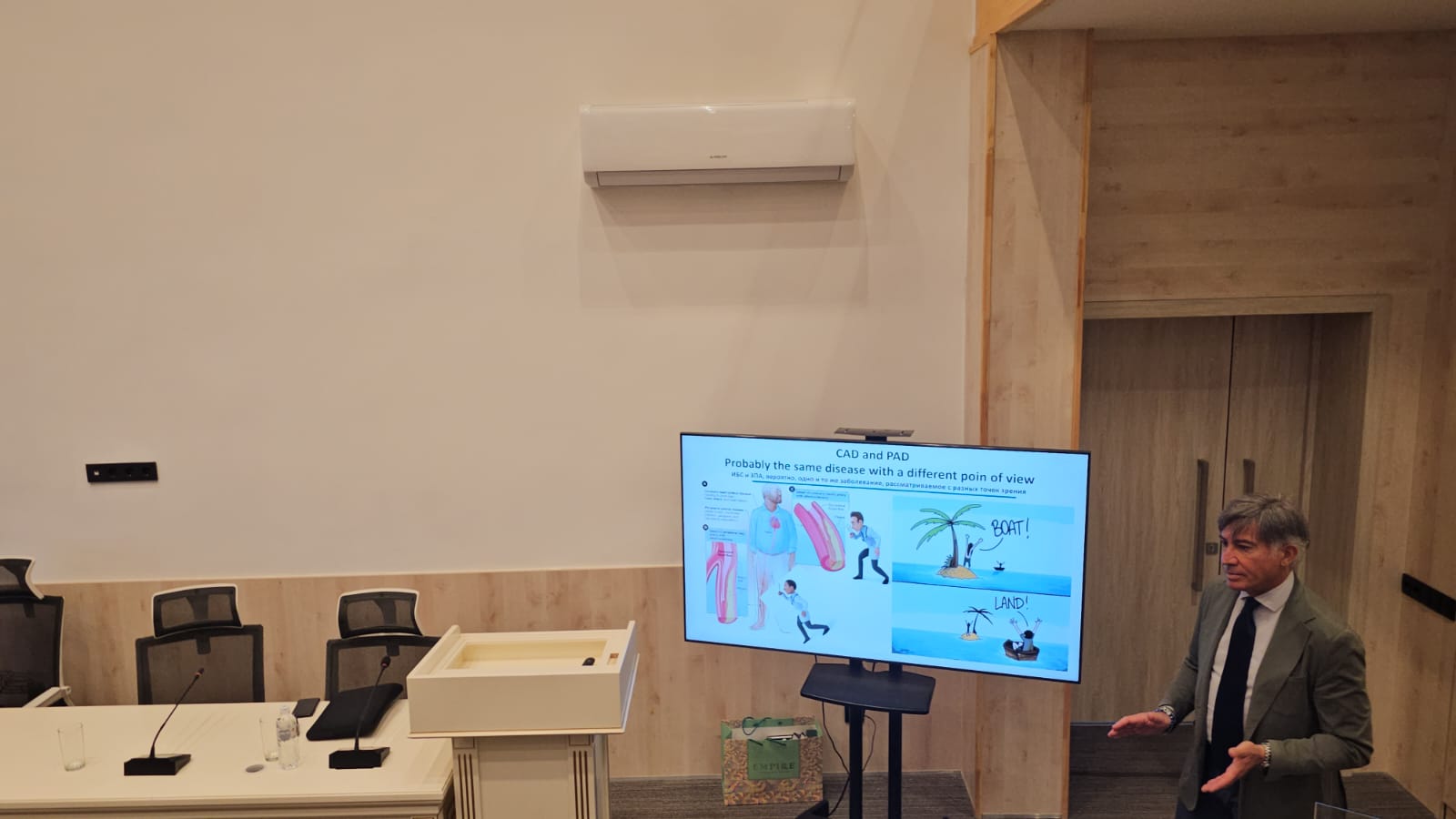
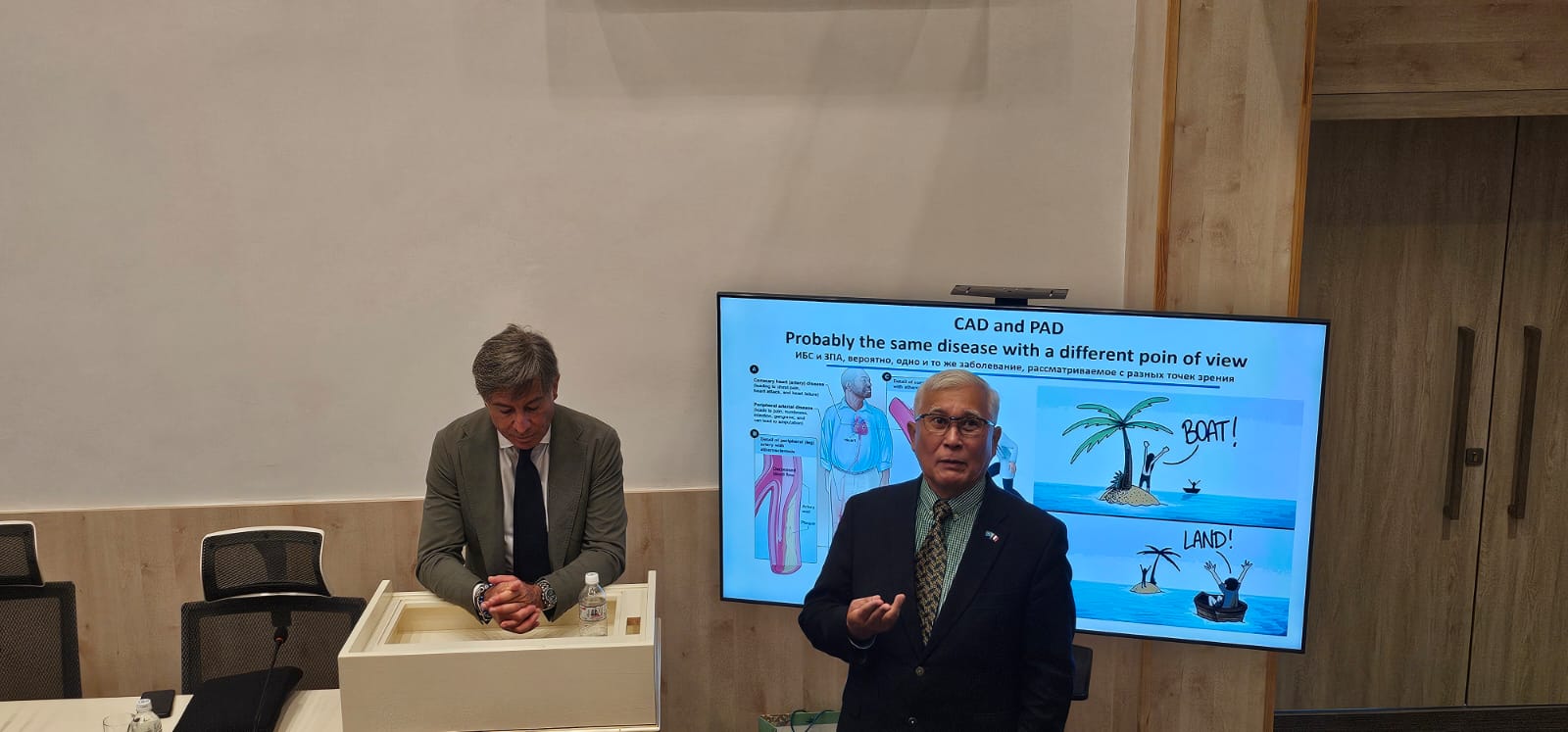
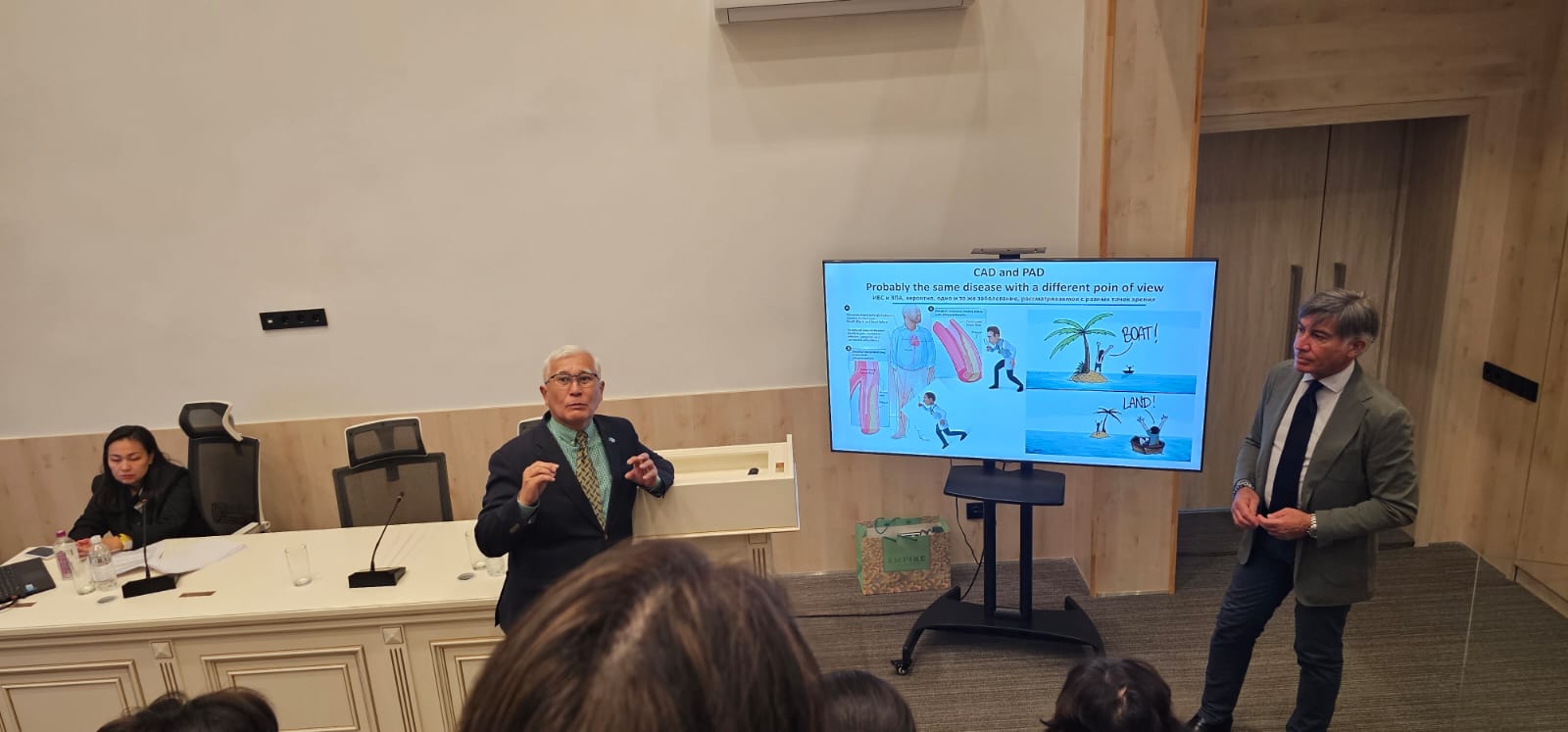
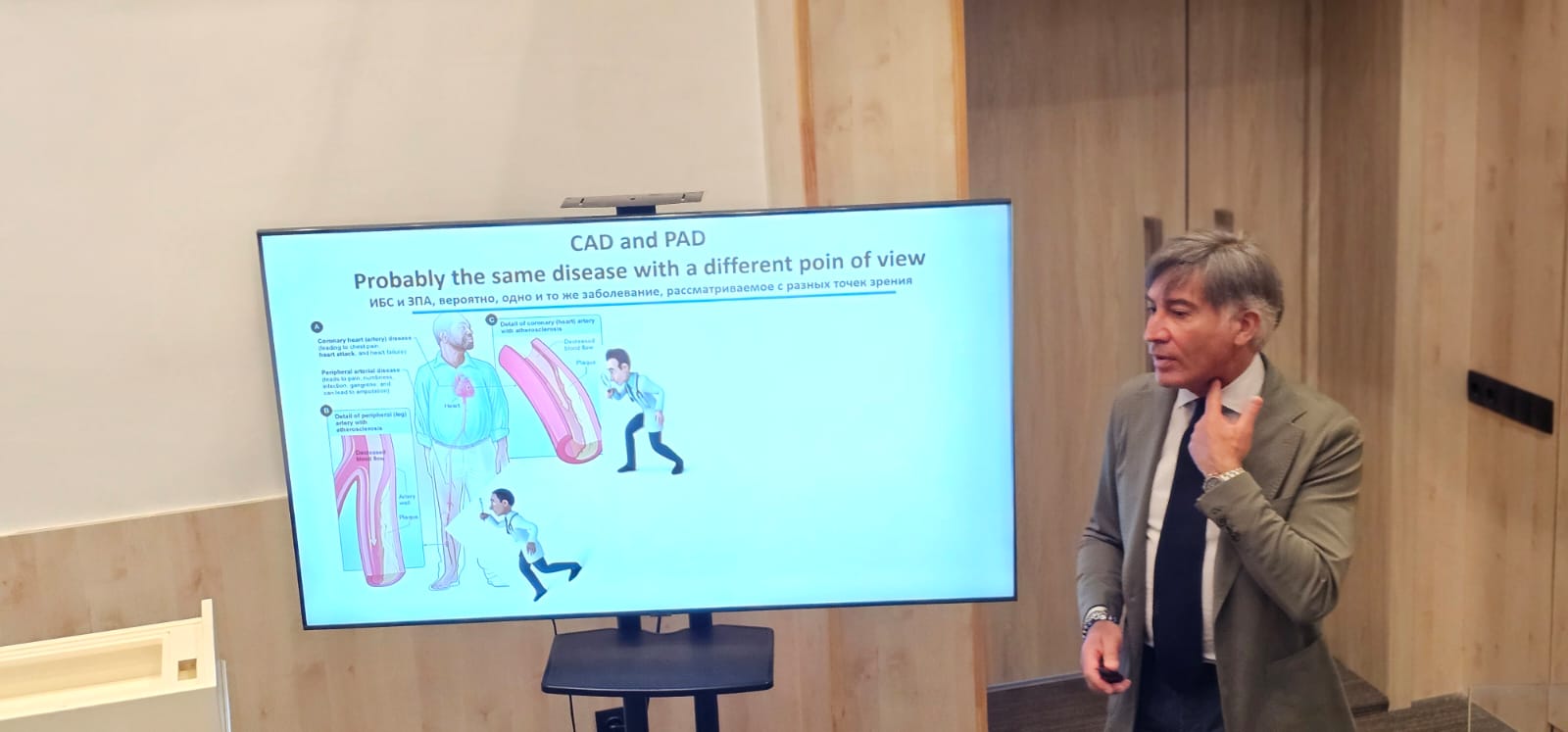
“Impact of CAD and PAD on CV disease: from pathophysiology to treatment”
— “Impact of Coronary and Peripheral Artery Disease on Cardiovascular Disorders: from Pathophysiology to Treatment”
(translation by PhD Yertayeva Zh.Ye.)
“Cigarette smoke, passive smoke, e-cigarette and CV system: an updated overview of the ESC community”
— “Passive Smoking, E-cigarettes and the Cardiovascular System: an Updated ESC Overview” (translation by Associate Professor, Candidate of Medical Sciences Rustamova F.Ye.) “Artificial intelligence in Cardiology: where do we are?”
— “Artificial Intelligence in Cardiology: Where Are We Today?”
(translation by Assistant Professor Kurbanova G.M.)
On May 21, 2026, Professor Plinio Cirillo delivered a presentation at the Ана Мед Форум–2026:
“The role of thrombosis in cardiorenal and metabolic syndrome”
— “The Role of Thrombosis in Cardiorenal and Metabolic Syndrome”
(translation by Associate Professor, Candidate of Medical Sciences Almukhamedova A.B.) The final lecture was: “Instructions for the antiplatelet therapy in the elderly” “Antiplatelet Therapy in Elderly Patients”
(translation by Associate Professor, Candidate of Medical Sciences Ishchanova A.K.) During the visit, Professor Plinio Cirillo met with the First Vice-Rector of Kazakh National Medical University named after S.D. Asfendiyarov.
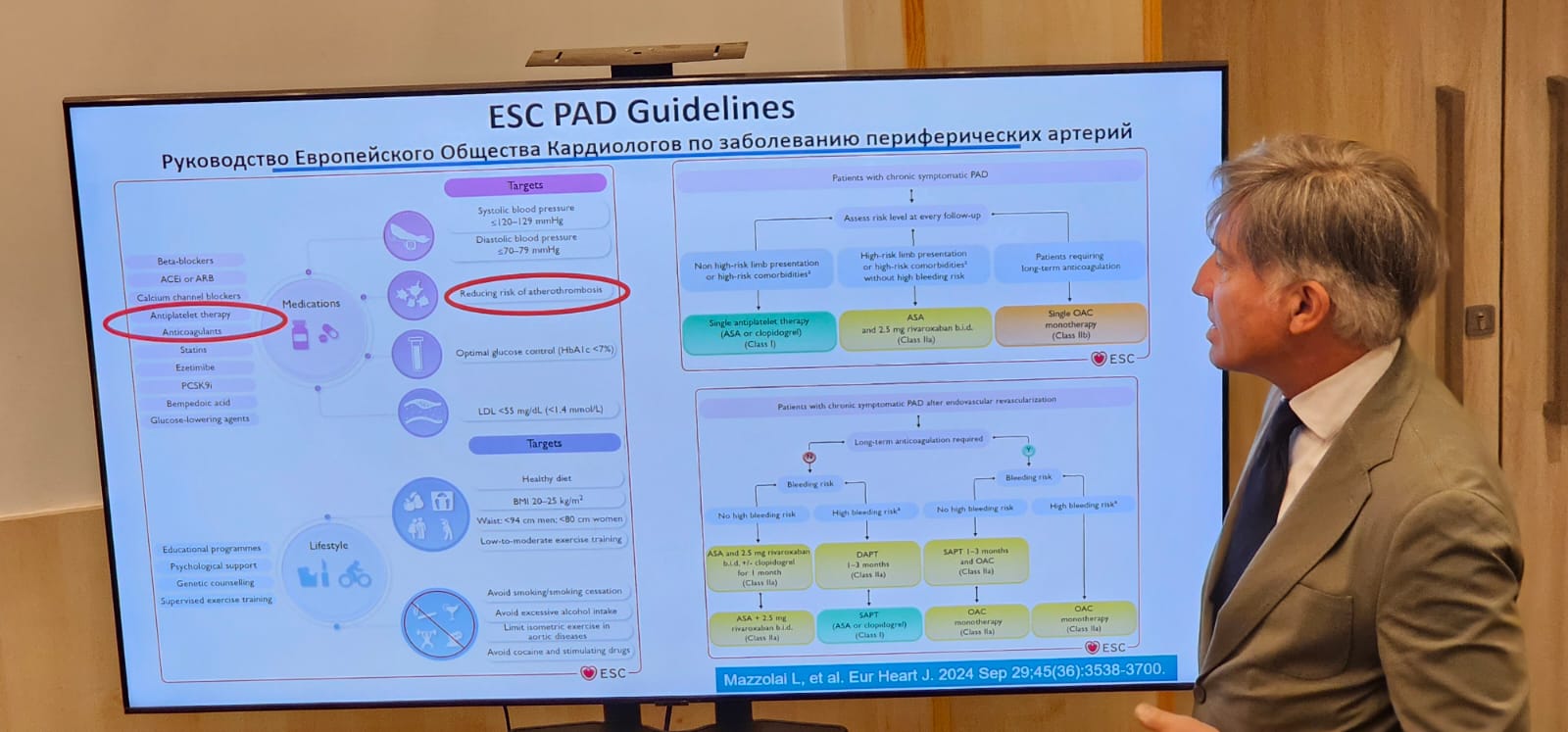
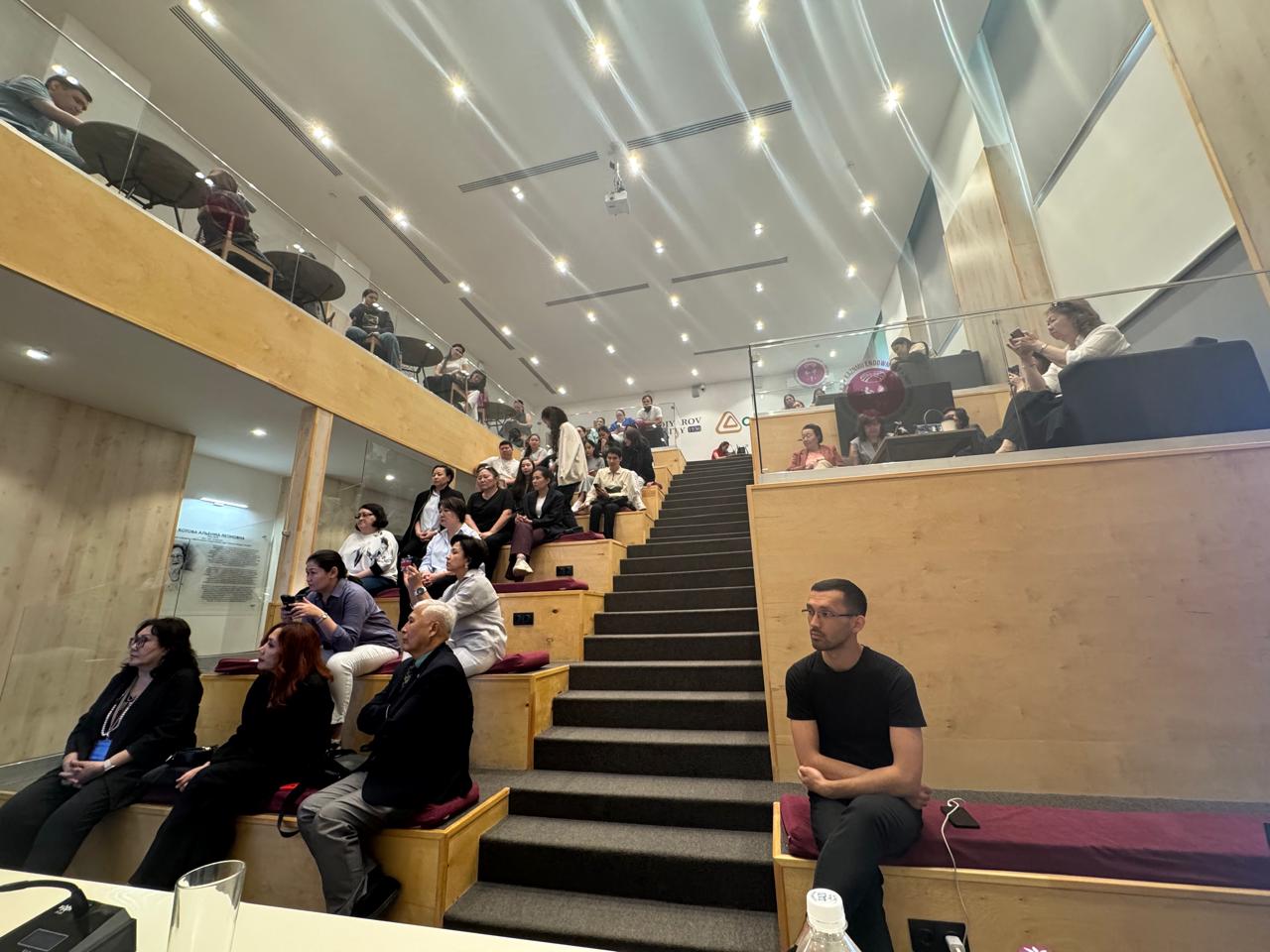
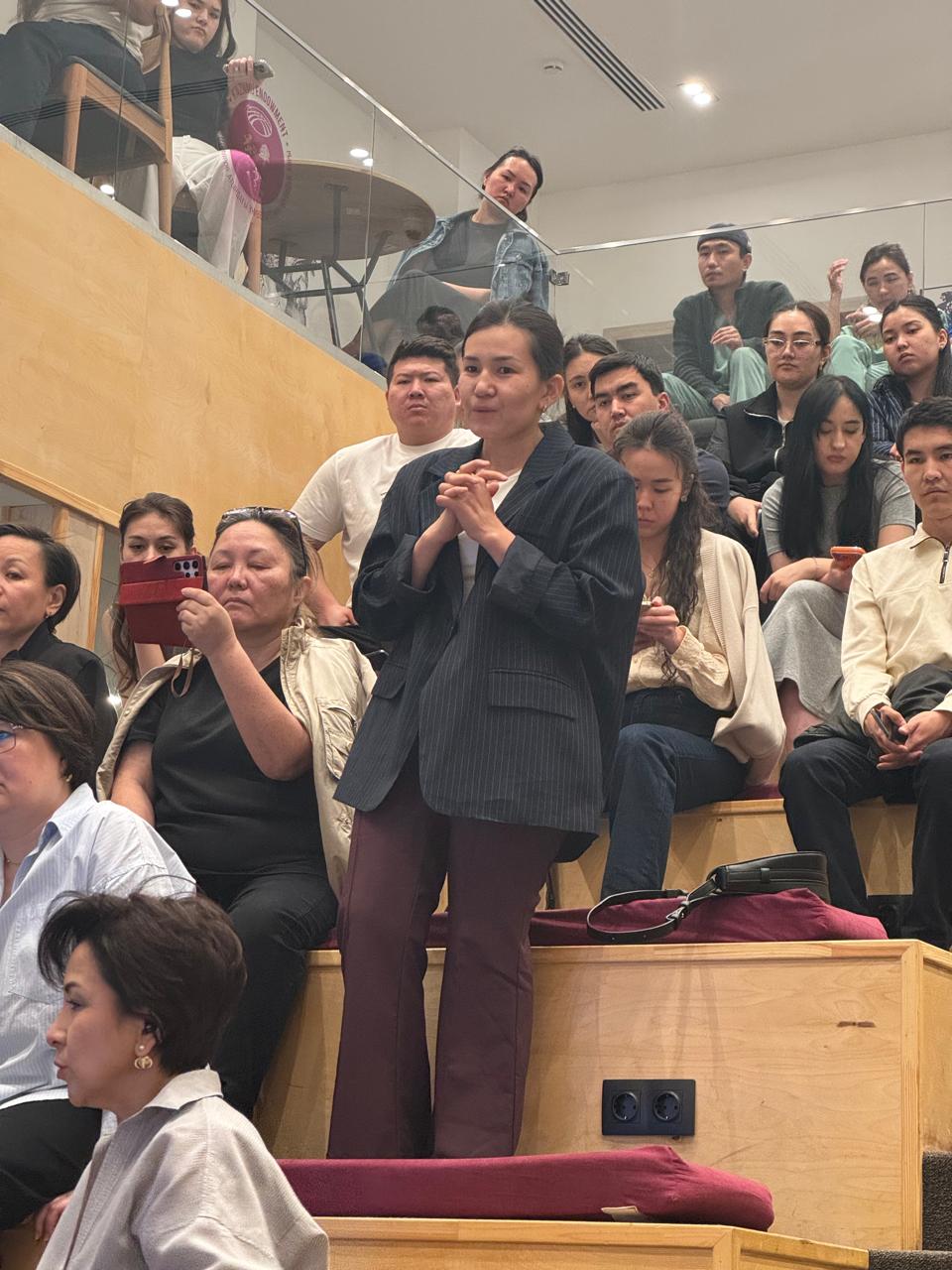
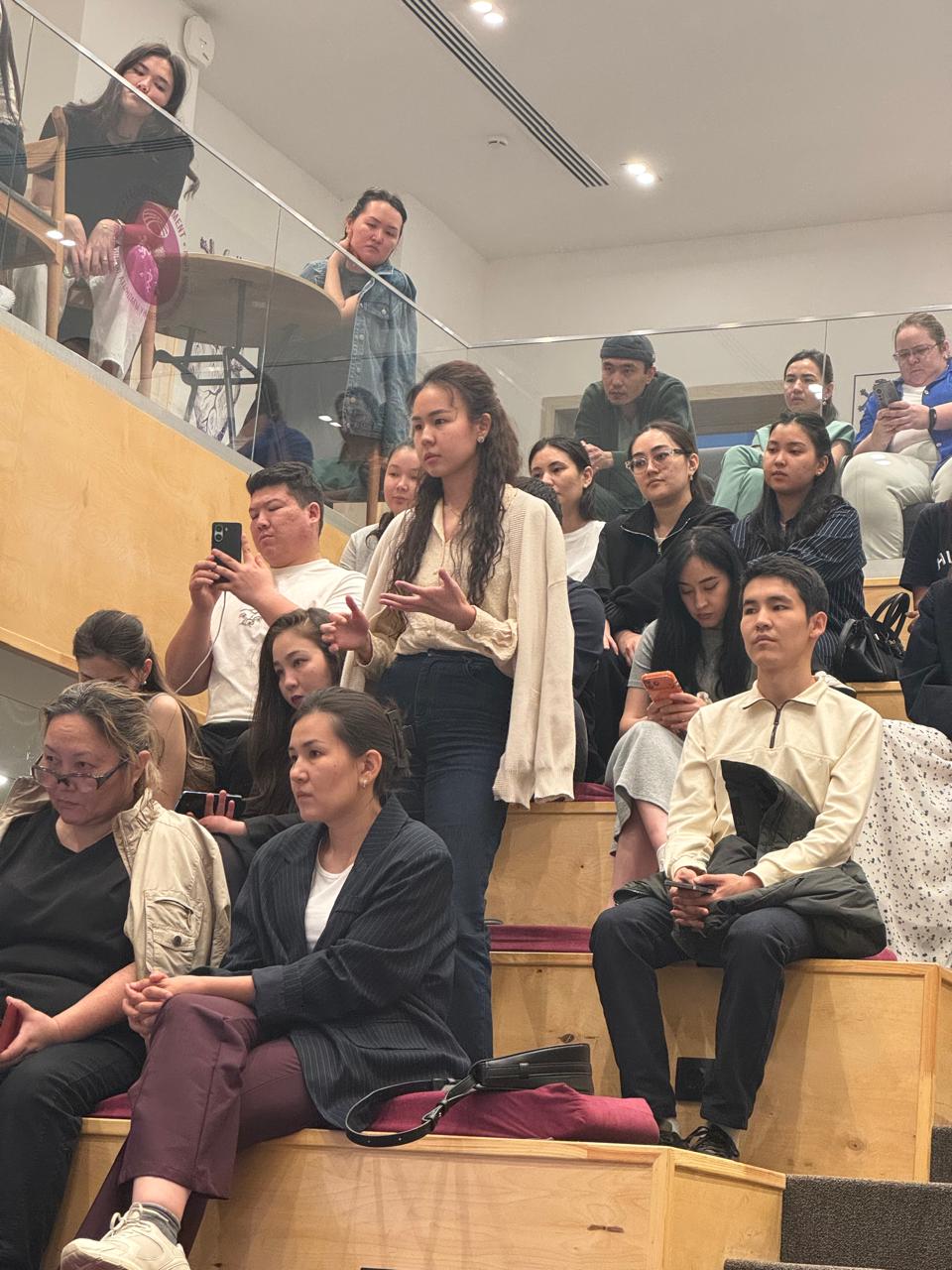
In addition, yesterday visiting professor Cirillo conducted consultations for severe comorbid patients at the National Hospital of the Medical Center of the Presidential Affairs Administration of the Republic of Kazakhstan. During the clinical discussions, key issues of modern diagnostics and treatment were reviewed according to the latest ESC clinical guidelines. The lectures generated significant interest among faculty members, residents, master’s students, doctoral students, and physicians of clinical bases. Participants highly appreciated the scientific level, relevance of the topics, and practical significance of the presented data in light of the latest ESC recommendations.