Microbiology and Artificial Intelligence: Winners of the First Round of Student Research
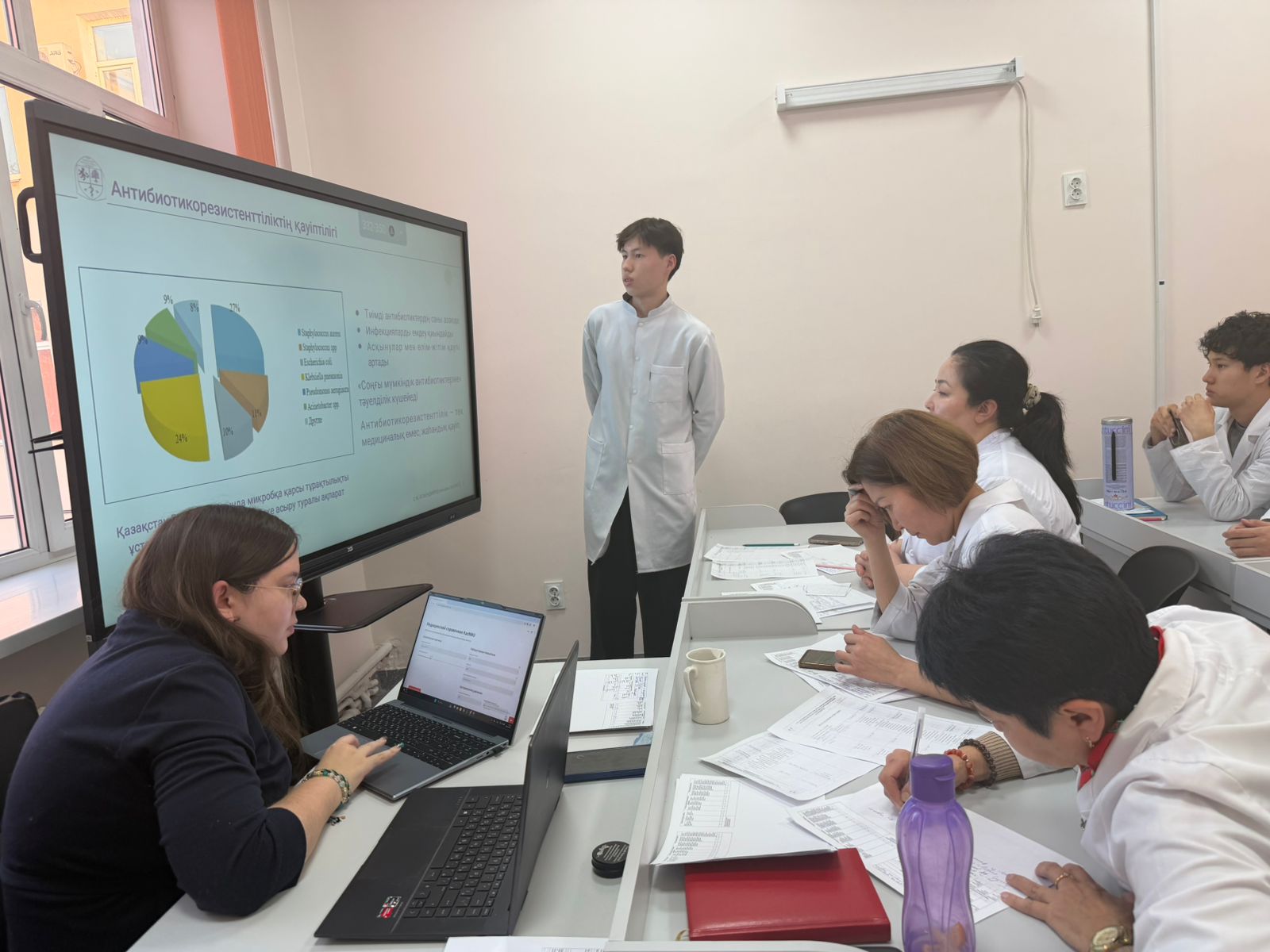
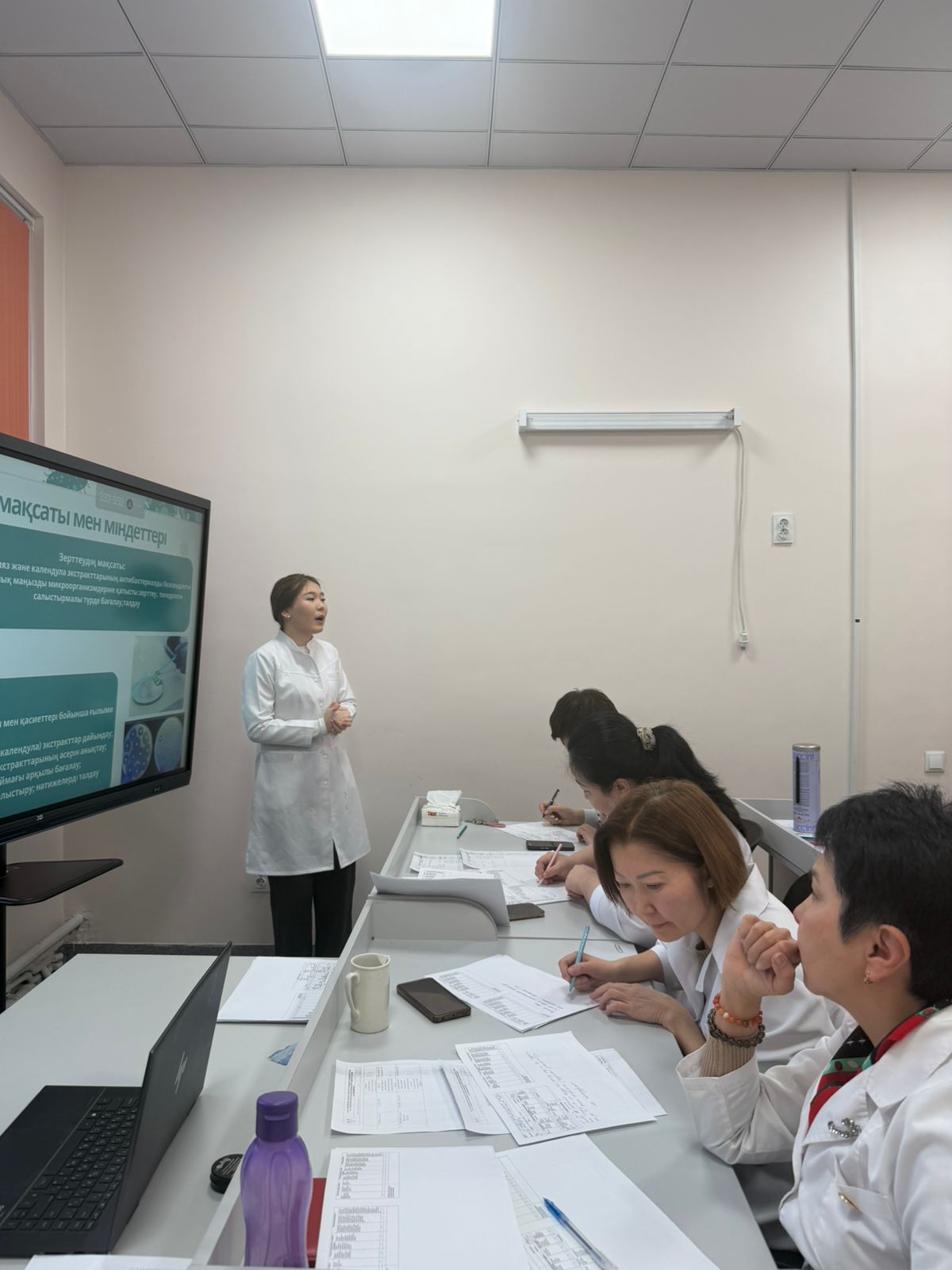
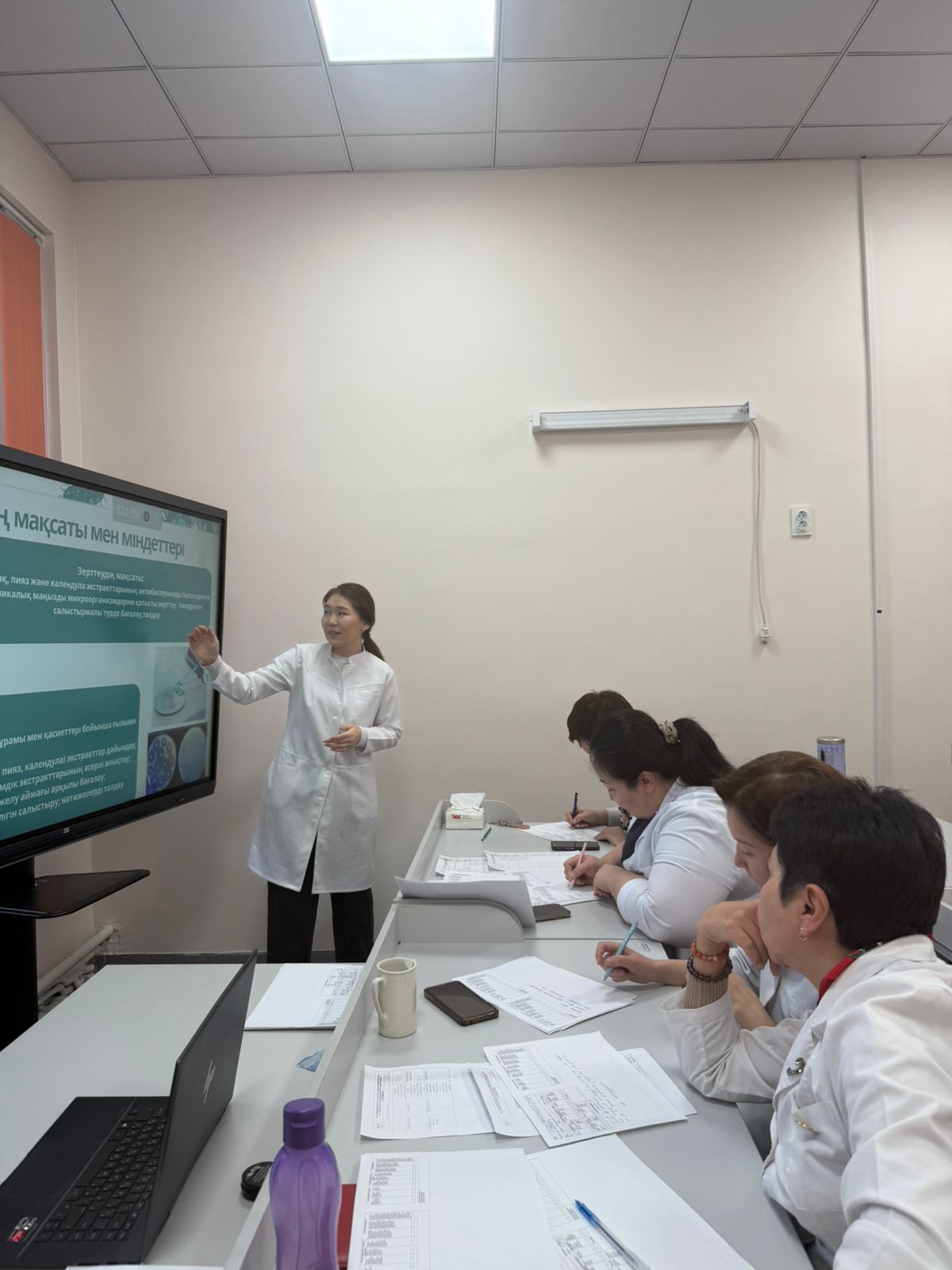
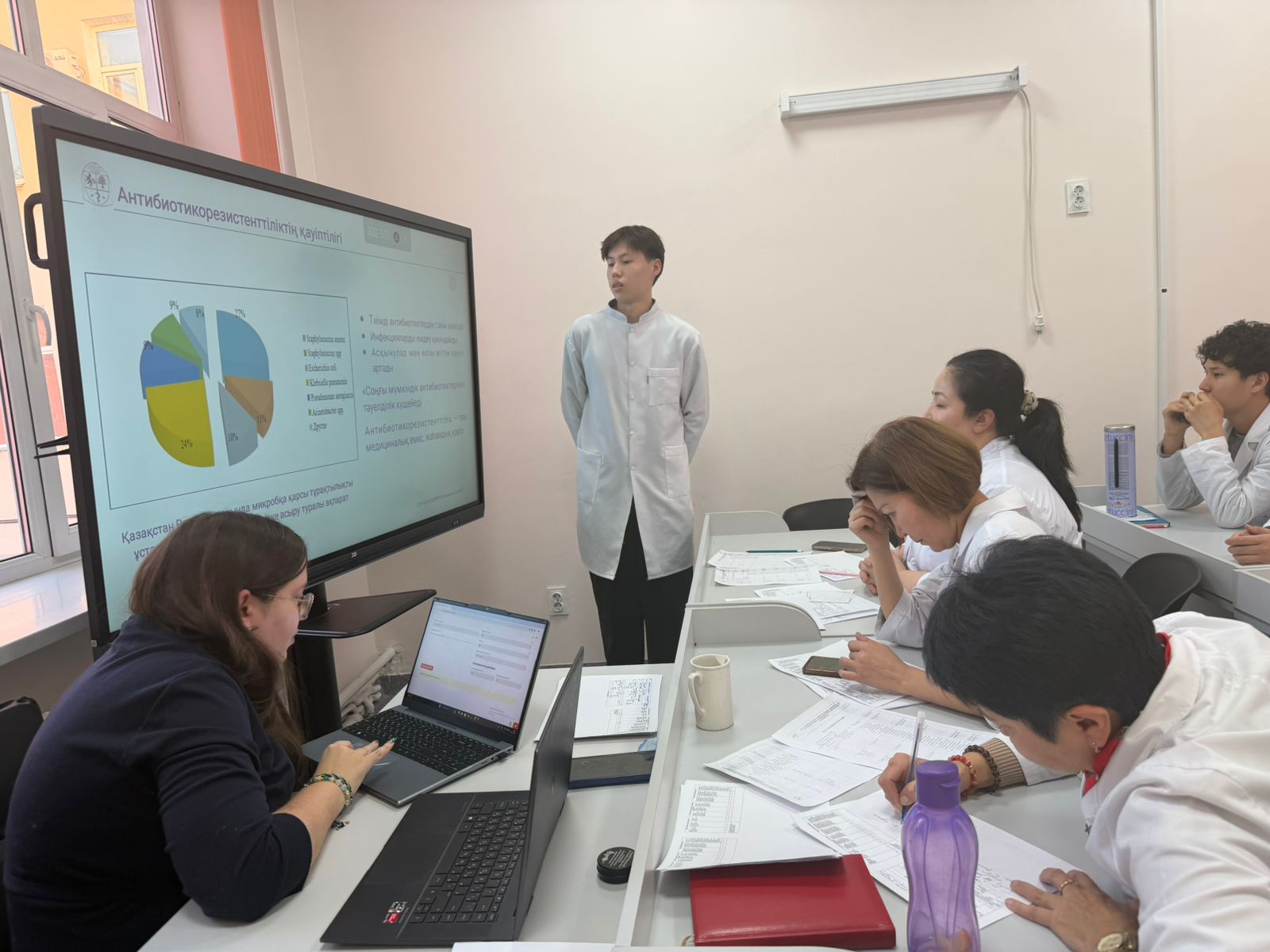
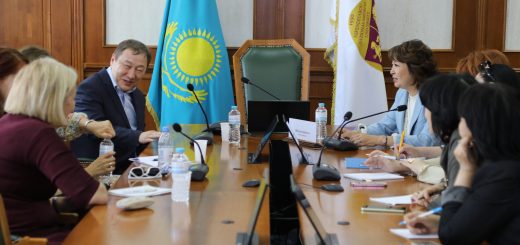
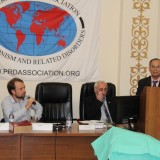
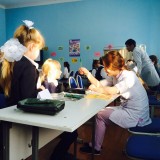
A meeting of the Scientific Research Club “Microworld” was held at the Department of Microbiology and Virology, during which the first round of the Student Research Competition took place. Students presented their research projects, received feedback from academic staff, and discussed modern microbiological research methods.
Prize winners:
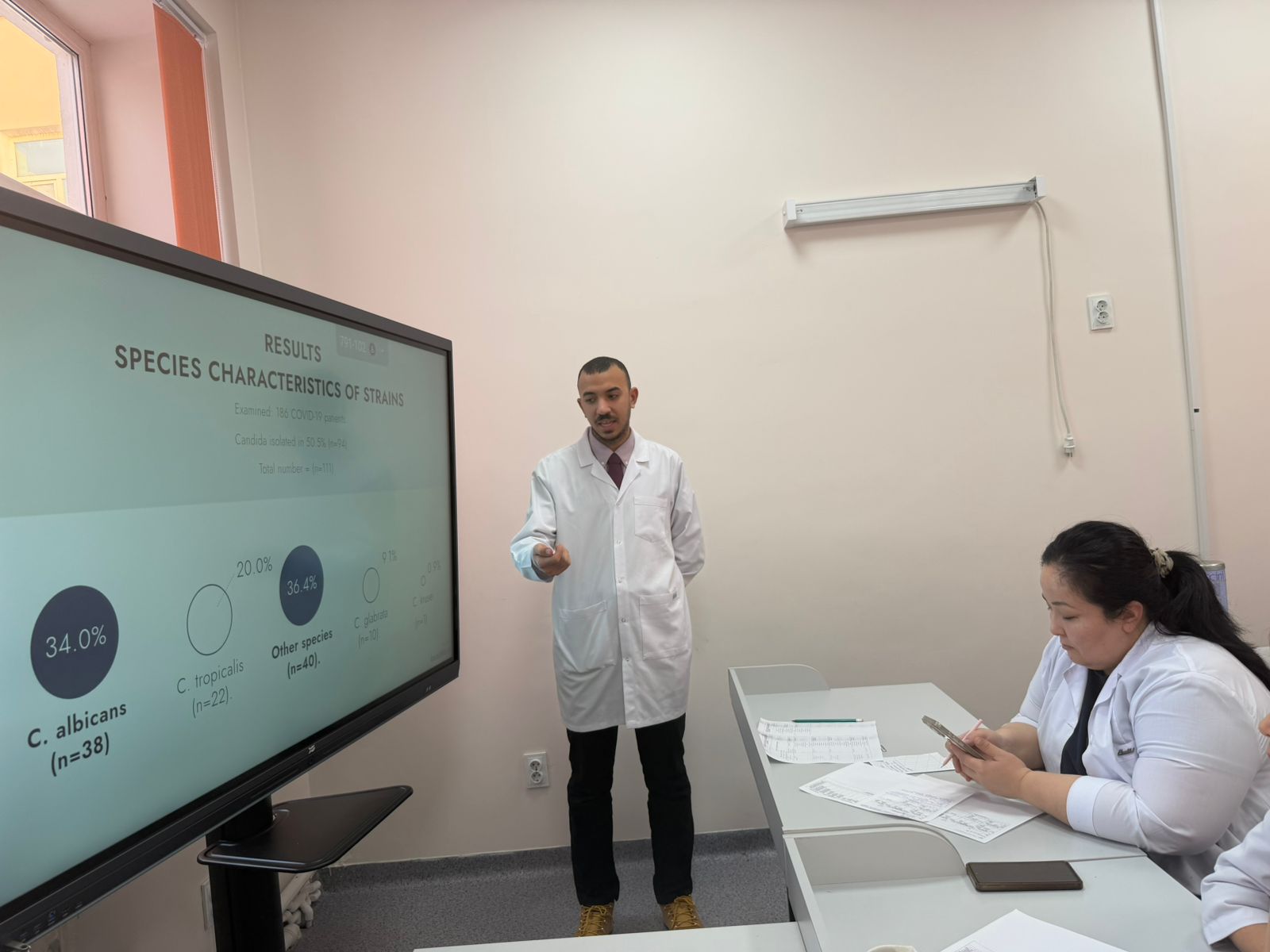
First place — Mohamed Mabrouk
Topic: “Phenotypic switching and expression of virulence factors of Candida spp. isolated from post-COVID-19 convalescent individuals”
Scientific Supervisor: PhD, Associate Professor E. Koloskova
Second place — Abay Aida, Zhakanbay Anuar, Kenesbek Sanzhar
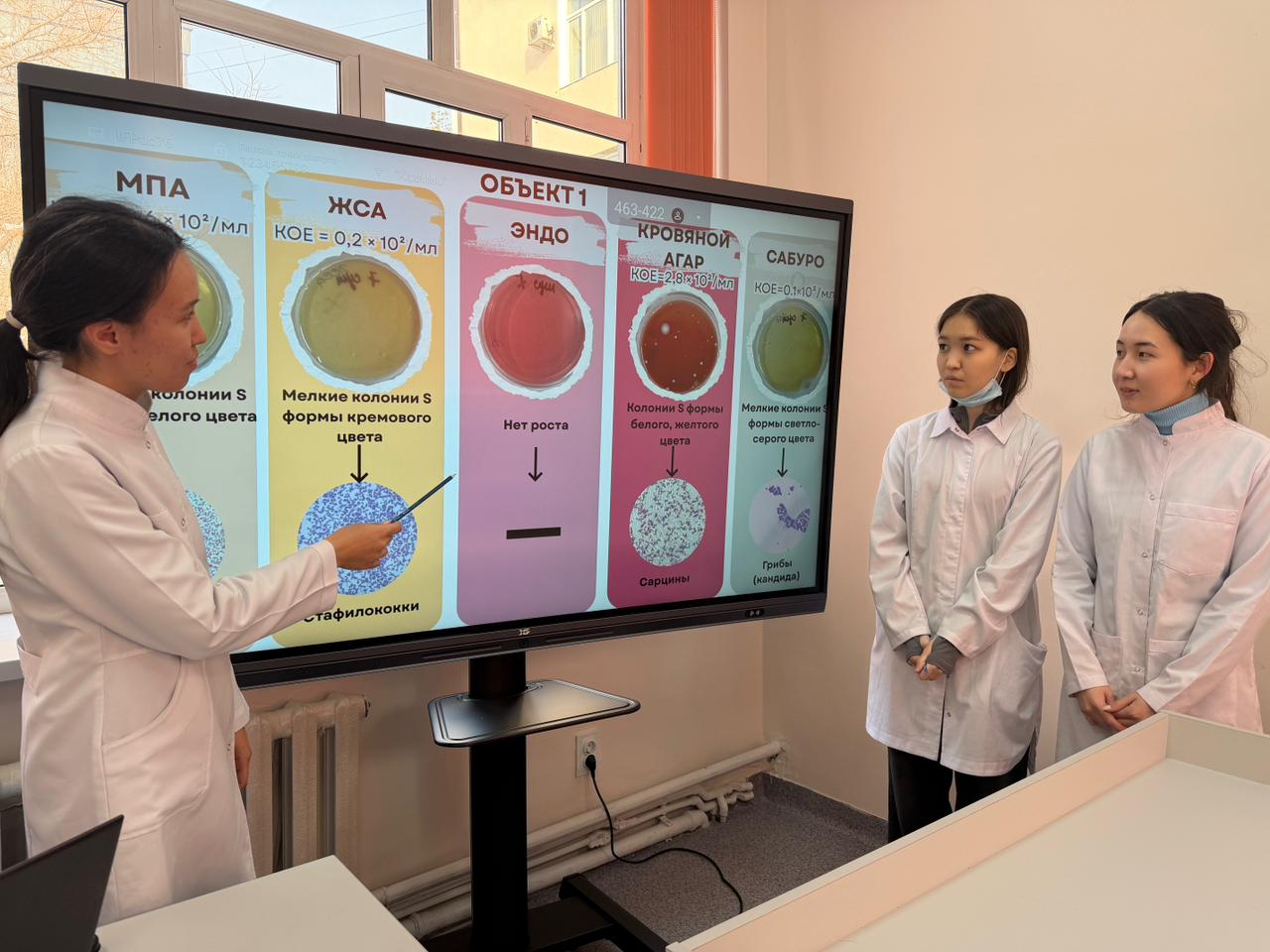
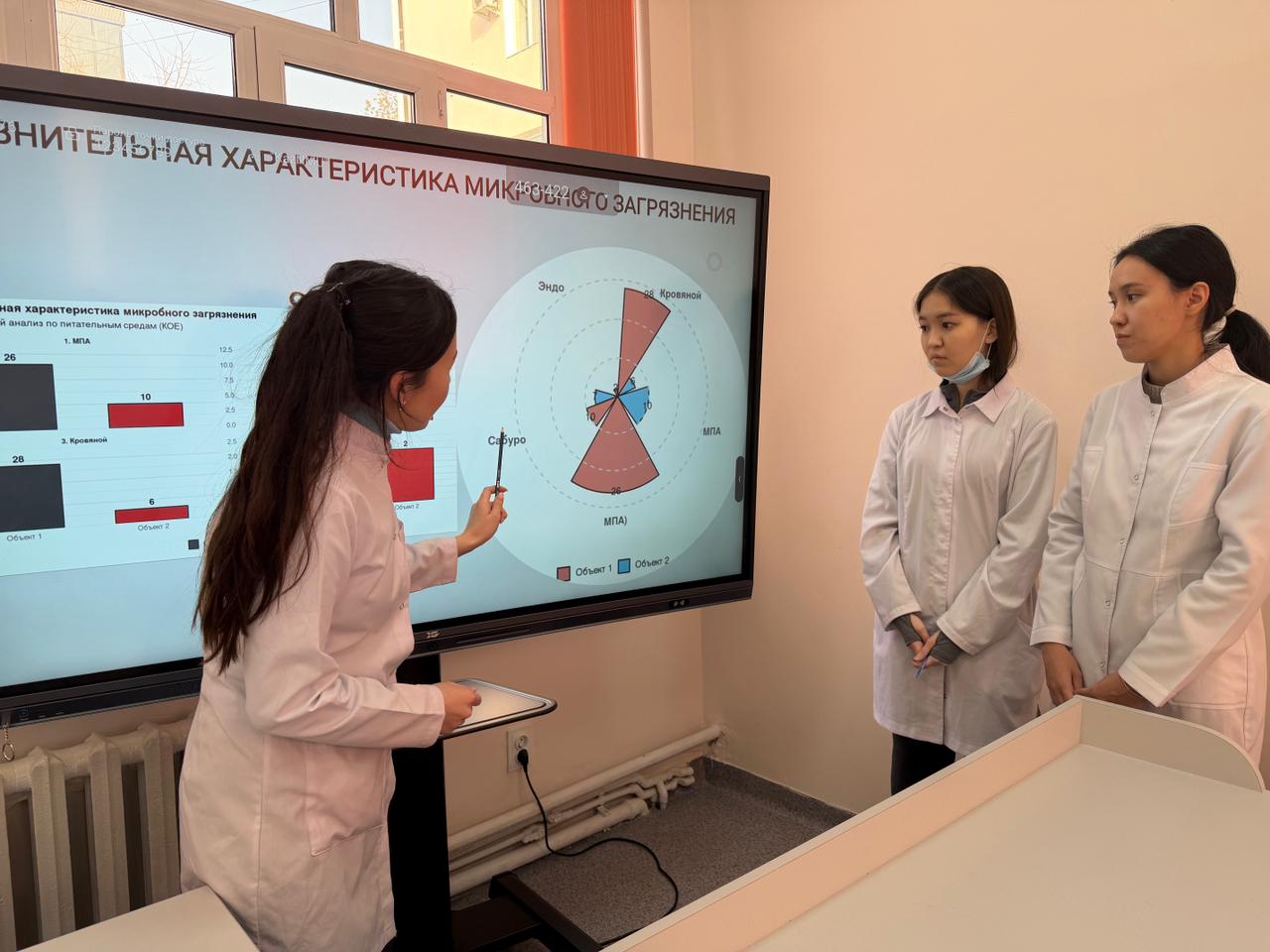
Topic: “Assessment of microbial contamination risks in coffee machines using elements of artificial intelligence”
Scientific Supervisors: Assistant Professor G. Beisegulova, Lecturer D. Bunyaeva
Third place — Nur Duman Dariya, Älimbek Aqmöldir, Nurgazy Nuraim
Topic: “Comparative assessment of the sanitary and hygienic condition of electric hand dryers using comprehensive microbiological and statistical analysis”
Scientific Supervisors: Assistant Professor G. Beisegulova, Lecturer D. Bunyaeva
According to the participants, the event was characterized by an active scientific discussion atmosphere. Students appreciated the opportunity to present their ideas, receive feedback from experienced instructors, and expand their knowledge of modern microbiological research methods.
The event was implemented taking into account the priorities of the Sustainable Development Goals (SDGs), in particular SDG 4 — Quality Education, SDG 3 — Good Health and Well-being, and SDG 9 — Industry, Innovation, and Infrastructure, aimed at promoting practice-oriented learning, strengthening public health, and integrating innovative technologies into educational and scientific processes.
The contribution to SDG 4 was ensured through the organization of the meeting of the scientific research club “Microworld” at the Department of Microbiology and Virology, during which the first round of students’ scientific research projects (SRP) took place. During the event, students presented the results of their own research, received methodological guidance from faculty members, and participated in professional scientific discussions. This form of work helps develop students’ research, analytical, and critical thinking skills, fosters scientific thinking, and encourages early involvement in academic and research activities.
The implementation of SDG 3 was reflected in the thematic focus of the presented studies, which addressed pressing issues in microbiology and public health, including the investigation of microbial virulence factors, sanitary and hygienic assessment of environmental objects, and prevention of microbial contamination. This aligns with the objectives of maintaining public health and enhancing sanitary safety.
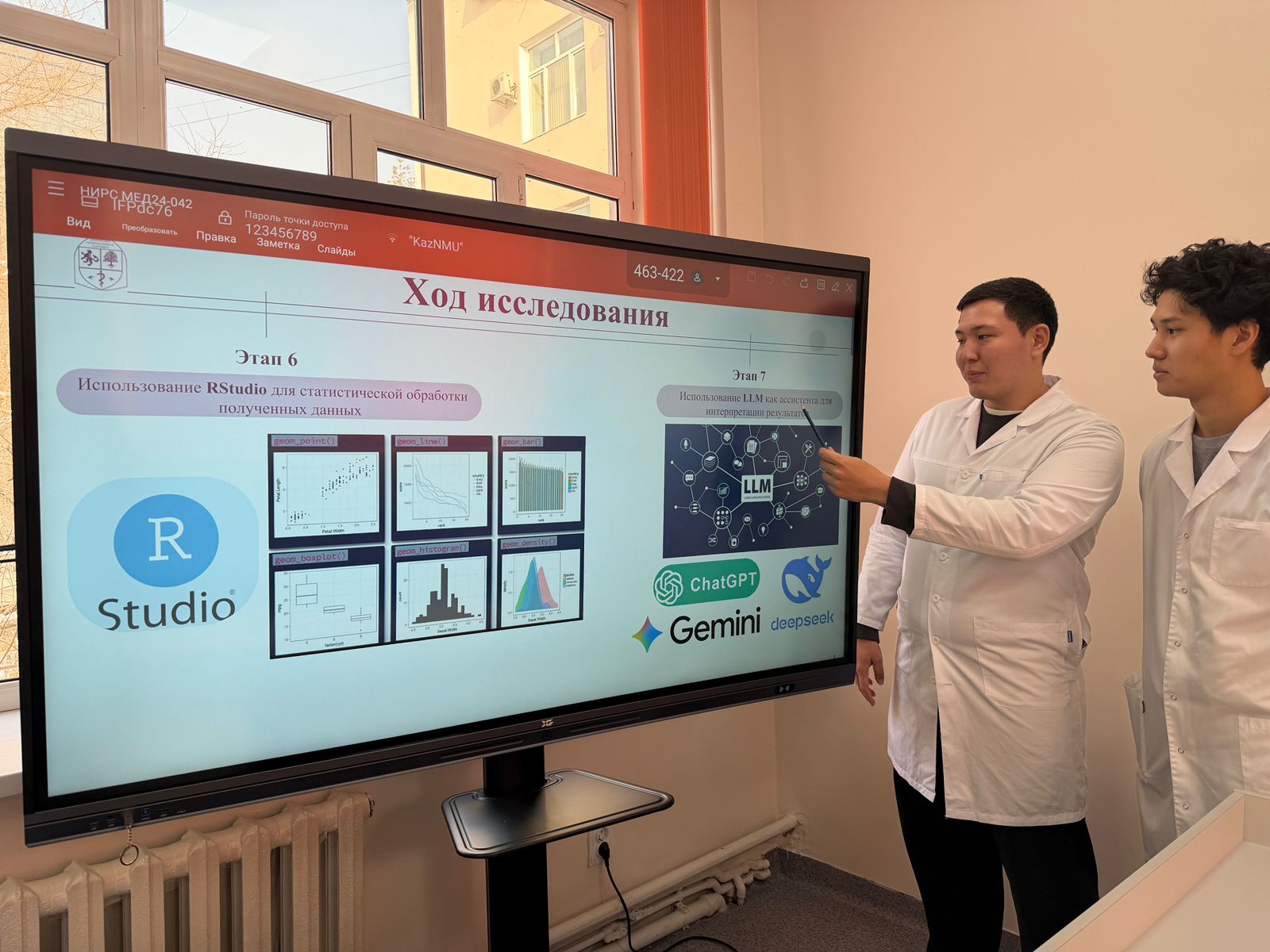
The contribution to SDG 9 was ensured through the integration of modern analytical approaches, elements of artificial intelligence, and statistical analysis methods into students’ research activities. The use of innovative technologies within the department’s modernization promotes the development of students’ digital and research competencies, increases the accuracy and reproducibility of scientific results, and fosters innovative thinking. Thus, conducting the first round of the SRP at the Department of Microbiology and Virology is a comprehensive educational and scientific initiative that enhances the quality of student training and contributes to the implementation of sustainable development priorities in the fields of education, health, and innovation.
Following the modernization of the department, elements of artificial intelligence are being actively integrated into research activities. This enhances students’ research capabilities, improves accuracy, and increases the practical relevance of the results.
We congratulate the winners and wish them success in the second round of the Student Research Competition